

ntttt
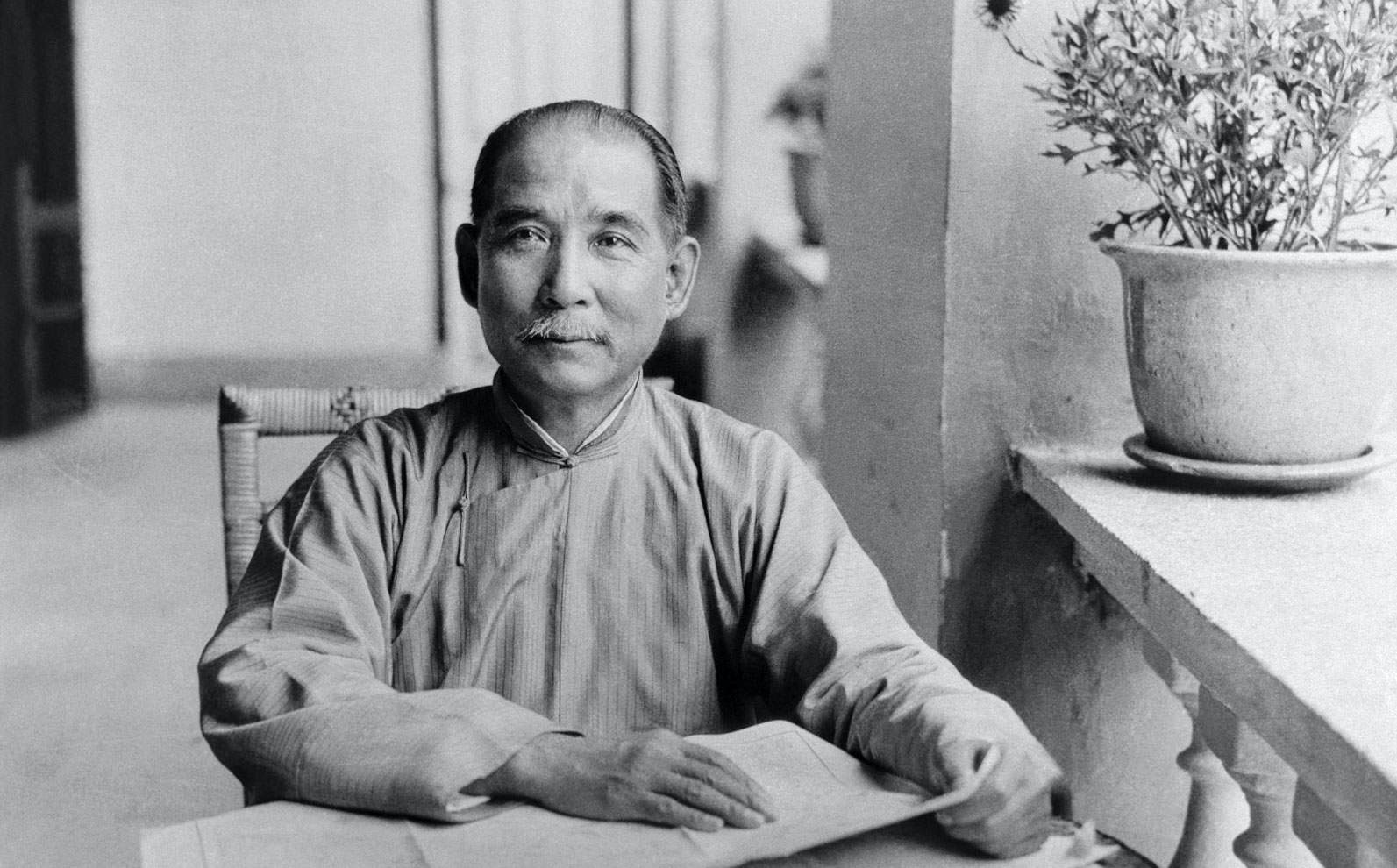
In my lifetime, I’ve had over thirty names. In the United States, people called me Sun Yat-sen; in Japan, most referred to me as Sun Wen. After the Xinhai Revolution, my comrades honored me with the name Sun Zhongshan. At home, my family called me Sun Dixiang—a name steeped in superstition, supposedly because a fortune-teller once predicted that I had the “destiny of an emperor.” But reality? The truth is, this so-called “emperor” was born into a poor farming family in Guangdong, standing less than five-and-a-half feet tall, and spent his entire life struggling through failures and setbacks in search of a way forward.
Some mocked me, giving me the nickname “Big Cannon Sun”(孙大炮). They said the term “big cannon” meant empty talker, because I led more than a dozen revolutions, almost all of which ended in failure. Indeed, if judged solely by results, their ridicule seemed justified. But what I want to tell you today is that every fall, every failure, gave me a clearer understanding of the root causes of our problems. As a farmer once remarked later on, “The lessons of failure are more instructive than the experiences of success.” So today, I want to share my story—not to justify anything, but in the hope that it might offer some insight for your own lives.

Childhood: Barren Land and Shattered Dreams
My ancestral home is Cuiheng Village(翠亨村) in Xiangshan County (香山县), part of the famed Siyi region—or “Four Counties”—in Guangdong Province. Today, Xiangshan is known as Xinhui, but back then, it was a land steeped in tradition yet burdened by hardship. Cuiheng itself was a small village of fewer than a hundred households, nestled just over 30 kilometers south of Macau and facing Hong Kong across the sea to the east. Sounds picturesque, doesn’t it? But in truth, like most villages in the Siyi region at the time, it was poor and backward. The soil here was sandy, yielding very little when planted with crops. Many villagers, struggling to make ends meet, left their homes to seek work elsewhere—some traveling across China, others venturing overseas in search of opportunity.
For generations, my family were farmers, living a hardworking yet monotonous life tilling the land. By the time of my grandfather, Sun Jingxian, we had managed to accumulate 20 mu of land—quite an achievement for a peasant family back then, since most people could only rent land from landlords. But my grandfather wasn’t satisfied. He believed in the power of feng shui. A geomancer told him about a place called Niuyan Longxue, a supposed “auspicious burial site” that would bring prosperity to future generations if the family’s ancestors were buried there.
When my grandfather heard this, he acted as though he’d struck gold. Fearing someone else might claim the land first, he immediately sold off the 20 mu of farmland we owned and purchased the plot. He moved the remains of our ancestors to this new location, then sat back, contentedly awaiting the promised rise of the Sun family.

But no prosperity came. Instead, poverty quickly descended upon us. Without land to farm, we became tenant farmers, renting fields from landlords to scrape by. Our family, once proud owners of modest farmland, now found itself struggling to survive. To make matters worse, my grandfather’s three sons—including my father—all had to leave home in search of opportunities.
Family Struggles: A Legacy of Hardship
My father, Sun Dacheng, was the eldest son. At the age of 16, he traveled south to Macau, where he worked in a shoe shop run by Portuguese merchants. For nearly 16 years, he earned a meager wage of four dollars per month—barely enough to feed himself. Only after returning home did he marry at the age of 33. Why so late? One word: poverty.
My father also had two younger brothers, Sun Xuecheng and Sun Guancheng. Neither of them benefited from the “auspicious burial site” either. Both lived in dire circumstances and eventually left home in search of better fortunes. My second uncle, Sun Xuecheng, set sail for California in 1864, lured by tales of gold mines discovered in the Sierra Nevada foothills. However, tragedy struck before he even left Chinese waters—he perished in a shipwreck near Shanghai.
Undeterred, my third uncle, Sun Guancheng, pressed on with dreams of wealth. His journey proved luckier than his brother’s; he reached California safely. Yet by the time he arrived, the gold rush was already winding down. Far from striking it rich, he died three years later in the mining districts of California, leaving behind a wife and children.
With both uncles gone, the responsibility of supporting their families fell to my father, further straining our already impoverished household. My father married late and started a family in his mid-thirties. His first child, my older brother Sun Mei, was born eight years into the marriage. Two years later, my sister Jin Xing was born, though she tragically passed away at the age of three. Another brother, Sun Deyou, followed, but he too died young, at the age of five. Then came my sister Sun Miaoxian in 1863, and finally, I was born in 1866, named Sun Deming according to the family genealogy. My youngest sister, Sun Qiuqi, completed the family in 1871.
Despite the auspicious predictions made at my birth, my arrival brought no relief to our family’s struggles. On the contrary, the growing number of mouths to feed only deepened our hardships. Poverty forced my older brother Sun Mei to drop out of school after just four years of education. At the age of 16, seeing no prospects at home, he resolved to follow in the footsteps of our uncles and try his luck overseas. Together with our uncle, he embarked on a journey to Hawaii.
Hope Beyond the Horizon
At first, my brother’s path mirrored that of countless others who left China seeking fortune. Like many migrants, he initially worked as laborer in a fellow Chinese immigrant’s vegetable garden in Honolulu, earning a modest salary of 15 yuan per month. Out of this, he sent 10 yuan back home to help support the family. But unlike most, my brother’s perseverance paid off. Over time, he built a thriving business empire in Hawaii, amassing 6,000 acres of farmland along with ventures in brewing, logging, and retail. His success transformed our family’s fortunes overnight.
To my superstitious father, this was proof that the decades-long investment in feng shui had finally borne fruit. “Our family will rise,” he declared confidently, convinced that the long-awaited prosperity was within reach.
Yet, as I would come to learn throughout my life, true change rarely comes from blind faith or reliance on external forces. It requires action, sacrifice, and an unwavering commitment to ideals—even in the face of repeated failures. This first chapter of my life, marked by struggle and hardship, laid the foundation for the revolutionary path I would later walk. But that journey—one of rebellion, loss, and eventual triumph—is a story for the next part.
Stay with me, for the road ahead is long, and the lessons are profound.
n
Continue Reading
n
- n
- The Taiping Rebellion and Sun Yat-sen’s Revolutionary Destiny
- Sun Yat-sen’s Early Life and Revolutionary Journey
- The Legacy of Wuyi: How a Region Ended the Qing Dynasty
n
n
n
n
Did your family’s story ever touch the world Sun Yat-sen fought to change? Every family has a story — the village they left, the journey they took, the name they carried. If this article stirred something, share your family’s story here — we read every one, and your story may help another reader find theirs.
Suggested Reading
Is this your family’s story?
Roots Of China is built from readers’ family histories. If a story here sounds like your own — a surname, a village, a journey — leave a comment below, or share your family’s story with us and we may be able to help you find your ancestral village.
