

Wuyi Roots Trip Accommodation Guide: Where to Stay in Kaiping and Taishan
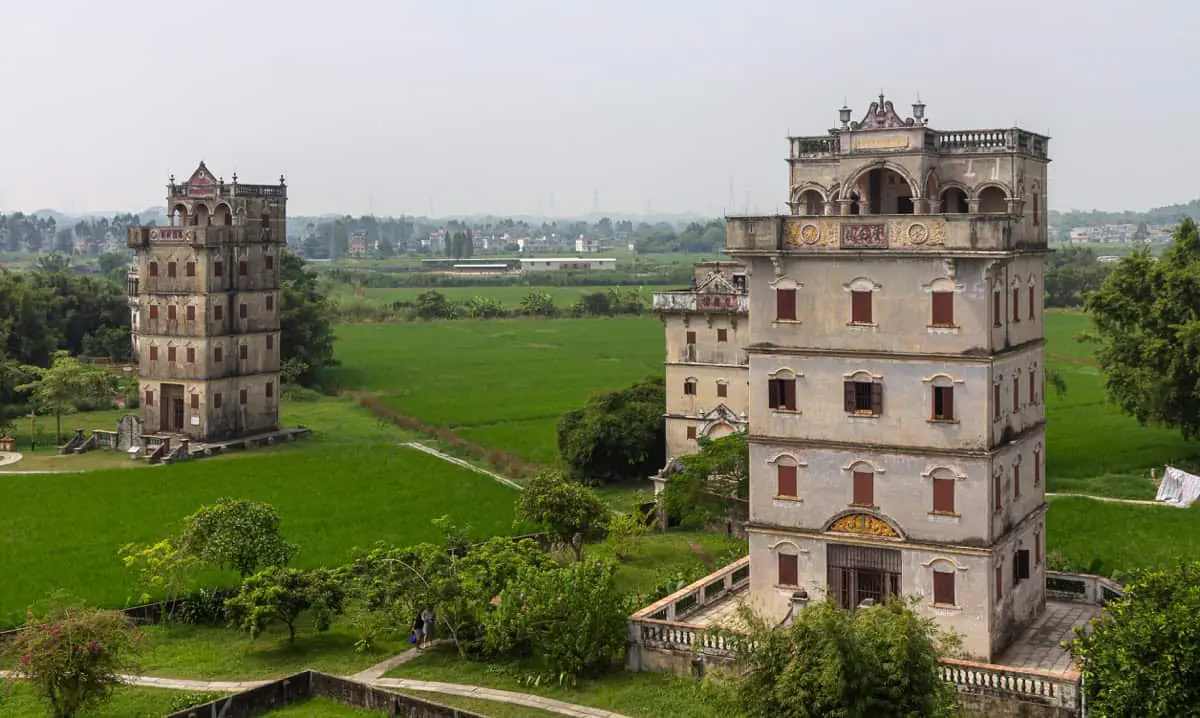
rnOver four million people of Wuyi (五, Wǔyì — the Five Counties) descent live outside China. Every year, thousands of them plan the journey back — a trip that may have been decades in the emotional making, passed down through family stories like an inheritance. The first practical question, after the plane ticket and the visa, is deceptively simple: where will I stay?rnrnIt is not a small question. Taishan (台) alone has over 4,000 natural villages — and fewer than 50 with any form of commercial accommodation. The ancestral village you have heard about your entire life, the place your grandparents described in the dialect you barely speak, may not have a single guesthouse. This is normal. It has been the pattern for decades: diaspora visitors sleep in county towns and drive to villages, arriving each morning like pilgrims to a site that is simultaneously foreign and deeply familiar.rnrnThis guide is for that journey. It covers where to stay, how to book, what to expect, and — most importantly — how to think about accommodation not as a logistical problem to be solved but as part of the roots trip (寻, xúngēn — “seeking roots”) experience itself. (For the full framework, see our Surname to Ancestral Village blueprint.) Because in Wuyi, the building you sleep in was probably built with remittance money sent home by someone who left a century ago and never returned. You are not just booking a room. You are inhabiting a love letter written in brick and mortar.rn
Understanding Wuyi’s Accommodation Landscape
rnWuyi accommodation was not built for tourists. It was built with qiaopi (侨) — remittance letters that combined money transfers with family correspondence, sent home by absent husbands, fathers, and sons from the 1860s through the 1970s. An estimated 2.4 billion yuan (in 1930s currency) flowed into Taishan alone through this system. Approximately 60% of remittances were spent on housing.rnrnWalk through Taicheng (台), Taishan’s county seat, and you are walking through a city built by laundry workers in San Francisco, railroad laborers in the Sierra Nevada, and market gardeners in Sydney. The qilou (骑) arcades, the Western-Chinese hybrid facades, the hotels above ground-floor shops — every structure is a monument to absence. Someone built this, paid for it with years of saved wages, and quite possibly never lived in it.rnrnThis history means Wuyi accommodation exists on a spectrum that no other Chinese destination quite replicates. At one end: international chain hotels in Kaiping City, built for the UNESCO World Heritage tourism that followed the 2007 inscription of the Kaiping Diaolou and Villages (开碉与落). At the other end: village guesthouses (民, mínsù) in restored diaolou towers, where you can sleep in a fortified building your great-grandfather’s generation constructed to protect the family from bandits. Between them: mid-range Chinese hotels in county towns, historic guesthouses in restored qilou buildings, coastal inns in old port towns, and hot spring resorts for visitors who want to combine roots-seeking with wellness.rnrnThere is no single “best” place to stay in Wuyi. There is only the right place for your specific journey — your ancestral village’s location, your generation’s comfort expectations, your language ability, and the emotional weight you are carrying.rnrn rn
rn
Stop One: County Seat Hotels (2-3 Nights)
rnMost roots trips begin in the county seat — Taicheng (台) for Taishan, or Kaiping City (开) for Kaiping. This is your settling-in phase. You will visit the overseas Chinese museum, buy a Chinese SIM card, exchange currency, arrange transport, and orient yourself before heading to the villages. A comfortable hotel in the county seat provides the reliable base you need.rn
Kaiping City (开市)
rnKaiping has the most developed tourism accommodation in Wuyi, driven by UNESCO diaolou tourism. The county seat offers the region’s only international-standard hotels.rnrnTop tier: The Crowne Plaza Kaiping (开潭半酒) is the only 5-star international chain hotel in Wuyi. River views, Western breakfast buffet, English-speaking staff, reliable WiFi, and the amenities diaspora visitors from North America or Australia will recognize. Expect 400-600 RMB ($55-85 USD) per night. If you need guaranteed comfort and familiarity on your first nights in China, this is it.rnrnMid-range: The Kaiping Lavande Hotel (丽酒) offers boutique mid-range accommodation at 250-400 RMB ($35-55 USD). Clean, modern, some English, good location near restaurants. Several Chinese business chains (Vienna Hotel, 7 Days Inn) provide basic but reliable rooms at 150-250 RMB ($20-35 USD).rnrnBest for: Visitors to Kaiping diaolou clusters (Zili, Majianglong, Jinjiangli), Chikan Old Town, and the Kaiping Diaolou Museum.rn
Taicheng — Taishan City (台)
rnTaicheng was known as “Little Guangzhou” (小州) in the 1930s, its remittance-funded qilou streets and commercial buildings creating a modern urban core in what was otherwise rural Guangdong. The central district along Tongji Road (通路) still preserves this atmosphere.rnrnHistoric option: The Taishan Overseas Chinese Hotel (台华大店) is a diaspora institution — built with overseas Chinese investment, it has hosted returning diaspora visitors for decades. Older facilities but unbeatable location and heritage. 200-350 RMB ($28-50 USD).rnrnModern option: The Taishan Gaoye Hotel (台高大店) is a 4-star business hotel with reliable comfort, good breakfast, and English-speaking front desk. 300-500 RMB ($40-70 USD).rnrnMid-range: Several business hotels in the central district offer clean, air-conditioned rooms at 150-250 RMB ($20-35 USD). The Taishan Overseas Chinese Museum (台华博馆) is within walking distance of most Taicheng hotels — plan your first morning here.rnrnBest for: Visitors to Taishan ancestral villages (Duanfen, Shuibu, Doushan, Guanghai, Haiyan), the overseas Chinese museum, and Taishan’s jade market.rnrn rn
rn
Stop Two: Staying Near Your Ancestral Village (2-4 Nights)
rnThis is why you came. The ancestral village is the heart of the roots trip — the place your family name was spoken for generations before it was spoken in San Francisco, Vancouver, or Sydney. Where you stay near it shapes the entire experience.rn
The Village Reality
rnMost ancestral villages in Taishan have no commercial accommodation. The village may consist of a few dozen houses, an ancestral hall, a fish pond, and rice paddies stretching to the hills. You will likely stay in the nearest market town and drive or take a bus to the village each day. This is not a failure of planning — it is the reality of rural Guangdong, and it has been the pattern for diaspora visitors for decades.rnrnThe emotional experience of this commute is part of the journey. Driving through lychee orchards and past fish ponds, watching the diaolou appear on the horizon, arriving at a village where every elder shares your surname — this is not a day trip. It is a homecoming (回, huíxiāng — “returning to the village”).rn
Town-by-Town Guide
rnDuanfen (端镇): The highest concentration of overseas Chinese heritage buildings in Taishan, including the Meijia Courtyard (梅大) — 108 qilou buildings constructed in 1932 with remittance money from overseas Meijia (Mei family) diaspora. Basic guesthouses in Duanfen town center; the Meijia Courtyard itself is a 30-minute visit from town. Duanfen is the priority destination for accommodation development in Taishan — expect more options in coming years.rnrnShuibu (水镇): A concentration of clan ancestral halls and traditional villages. Limited accommodation — mostly small guesthouses and family-run inns. This is the most “authentic” option for visitors who prioritize proximity to clan sites over comfort.rnrnDoushan (斗镇): Well-preserved qilou streets, fewer international visitors, strong local character. Basic guesthouses. Good for visitors whose ancestral villages are in eastern Taishan.rnrnGuanghai (广镇): One of the two historic departure ports. Maritime heritage, seafood restaurants, coastal atmosphere. Small hotels and guesthouses. Staying here connects your roots trip to the migration story — your ancestors likely departed from this coastline.rn
The “Staying with Relatives” Question
rnFor generations, diaspora visitors stayed with family — the default accommodation was a relative’s spare room. This is changing. Second and third-generation visitors often lack the close family connections that made homestays natural. Staying in commercial accommodation also avoids the complex obligations of being a houseguest: the pressure to accept every meal, the difficulty of setting your own schedule, the emotional exhaustion of constant family interaction after long travel days.rnrnIf you DO have relatives who want to host you, and you want to accept, that experience is irreplaceable. But for most diaspora visitors today, a guesthouse in the nearest town is the practical and emotionally sustainable choice.rn
The First Night
rnThe first night in or near your ancestral village is the emotional peak of the roots trip. The sounds (roosters at dawn, distant village life, the particular silence of rural Guangdong after dark), the air (subtropical humidity, the scent of rice paddies), and the weight of knowing you are sleeping in the landscape your ancestors knew. This is not a hotel stay. It is the fulfillment of a multi-generational family story.rnrnBe prepared for it to be hard. Jetlag, culture shock, and the accumulated emotion of a journey decades in the making can hit all at once. Give yourself permission to rest. The journey gets easier after the first night.rnrn rn
rn
Stop Three: Port Towns, Scenic Areas, and Closure (1-2 Nights)
rnAfter the emotional intensity of the ancestral village, many visitors benefit from a third stop — a place to breathe, reflect, and see a different side of Wuyi.rnrnGuanghai (广镇): If you didn’t stay here as your village base, consider it as a stop. The historic departure port where tens of thousands of Wuyi emigrants boarded ships for destinations they could not imagine. Seafood restaurants along the waterfront, coastal walks, small hotels. Visiting the port your ancestors departed from brings the migration story full circle.rnrnChikan Old Town (赤古), Kaiping: The most ambitious heritage restoration project in Wuyi. A 6-billion RMB investment (2017-2025) has transformed the historic qilou streetscape into a tourism destination with boutique hotels in restored buildings, riverside restaurants, and museums. This is the most polished heritage experience in the region — polished enough that it can feel like a movie set. If your roots trip has been emotionally raw, Chikan offers a gentler re-entry before you head home.rnrnShangchuan and Xiachuan Islands (上川): Beach resorts popular with domestic Chinese tourists. A complete change of pace from village visits. Basic to mid-range accommodation. Best in summer months but can be crowded during Chinese holidays.rnrnHot springs: The Duhu (都), Sanhe (三), and Baisha (白) areas have hot spring resorts with private pools. Combines roots-seeking with wellness — a dip in mineral waters after days of village visits and ancestral graves.rnrnThese stops are optional. Some visitors want immersion right until the end. Others need transition space. Listen to yourself.rn
The Mingsu Experience: Sleeping in History
rnIn a converted diaolou outside Kaiping’s Tangkou town, you can sleep in a tower your great-grandfather’s generation built to protect their families from bandits and warlords. The walls are a meter thick. The windows are narrow — designed for rifles, not views. The rooftop looks out over rice paddies and fish ponds, the same landscape your ancestors knew. This is mingsu (民) — village guesthouses in restored heritage buildings — and it is the most distinctive accommodation Wuyi offers.rnrnThe mingsu movement emerged around 2015-2020, driven by government incentives for heritage tourism and growing diaspora demand for authentic experiences. These are not hotels. They are family homes, ancestral residences, and fortified towers converted to guesthouses — often by local families, sometimes with diaspora investment. The owner may live on-site, cook your breakfast, and share stories about the building’s history.rnrnWhere to find mingsu:rn
- rn t
- Tangkou (塘镇), Kaiping: The pioneer. TK-Space (塘空) is the most famous — a converted watchmaking factory turned community hostel, sleeping up to 100 guests in dorm-style rooms and private suites. Run by Rocky Deng and his team, it functions as both accommodation and diaspora cultural center. Several smaller boutique mingsu have opened nearby, many in restored diaolou with 3-8 rooms each. This is the single best area for mingsu in all of Wuyi.
- Chikan Old Town (赤古): Restored qilou buildings now house boutique hotels with 10-20 rooms each. More polished than Tangkou, less intimate. The qilou architecture — arcaded ground floors with residential upper stories — creates a distinctive streetscape experience.
- Near Zili and Majianglong diaolou clusters: Emerging options. Limited availability — book well ahead. The experience of staying within walking distance of UNESCO-listed diaolou is unmatched.
rn t
rn t
rn
rnWhat to expect: Thick stone walls keep rooms cool in summer and warm in winter. Hot water usually works. WiFi may be unreliable — download maps and translation tools before arriving. Breakfast may be simple Chinese fare (rice porridge, steamed buns) or not provided — ask when booking. English is rare; a translation app is essential. Mosquitoes are present year-round in rural areas — bring repellent. Roosters at dawn are universal.rnrnWhat you get: The experience of sleeping in a building your ancestors’ generation constructed. The owner’s family stories. The rooftop view at sunset. The knowledge that you are not visiting history — you are inhabiting it.rnrnMingsu is for visitors who prioritize atmosphere over guaranteed amenities. If you need reliable WiFi, Western breakfast, and English service, stay in a county seat hotel and day-trip to the villages. If you want to wake up inside a diaolou, mingsu is the reason to come.rnrn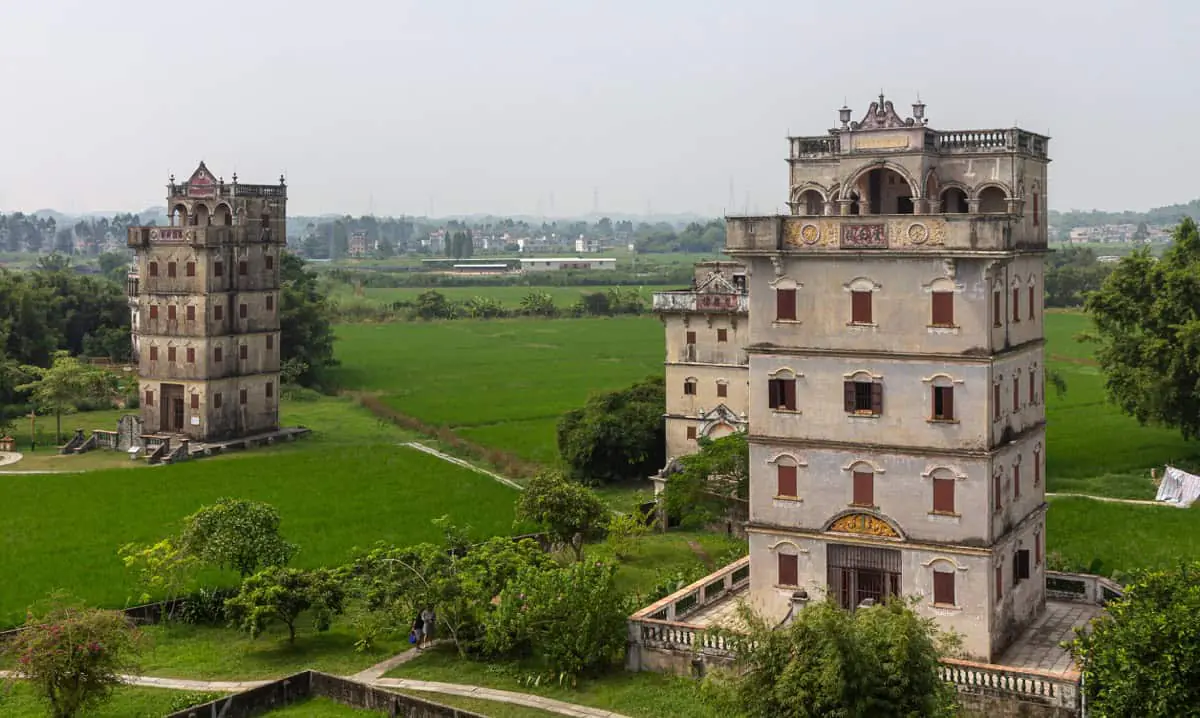 rn
rn
Practical Booking Guide
rnBooking accommodation in Wuyi is not like booking a hotel in New York or London. The platform divide is real, and many of the best village guesthouses have no online presence at all.rnrnWhich platform to use:rn
- rn t
- Trip.com (携国版): Best option for international visitors. English interface, international credit cards accepted. Comprehensive listings for Kaiping and Taicheng hotels. Limited village guesthouse listings. Start here for county seat hotels.
- Ctrip (携, Chinese version): More comprehensive than Trip.com, especially for mid-range Chinese hotels. Chinese language only. Requires Chinese phone number for some functions.
- Booking.com: Very limited Wuyi coverage — maybe 5-10 listings total, all in Kaiping City. Not recommended as primary platform.
- WeChat (微): Many village guesthouses only accept bookings through WeChat. If you have a local contact or can communicate in Chinese, this opens up the full range of options. Search the guesthouse name in WeChat, add the owner as a contact, and message directly.
rn t
rn t
rn t
rn
rnPayment: International credit cards are accepted at Crowne Plaza and major hotels. WeChat Pay or Alipay (支宝) are essential for village guesthouses and most mid-range Chinese hotels. Cash (RMB) is accepted everywhere. Set up WeChat Pay or Alipay before arriving — it will simplify every transaction on your trip.rnrnLanguage tips for booking:rn- “我订间” (wǒ yào dìng fángjiān) — I want to book a roomrn- “有调” (yǒu kōngtiáo ma) — Do you have air conditioning?rn- “有WiFi吗” (yǒu WiFi ma) — Do you have WiFi?rn- “有水” (yǒu rèshuǐ ma) — Do you have hot water?rn- “多钱晚” (duōshǎo qián yī wǎn) — How much per night?rnrnNavigation pitfalls: Village names repeat across townships in Taishan. There are multiple “Long’an Village” (龙村) and “Xinwei Village” (新村) in different towns. GPS coordinates are often inaccurate. Before booking, confirm the exact town (镇, zhèn) and village (村, cūn) names. If possible, have a Chinese-speaking contact verify the location.rnrnSeasonal planning: Peaks — Qingming Festival (清, early April, tomb-sweeping), National Day (国, October 1-7), and Chinese New Year (春, January/February). Book 2-3 months ahead for these periods. Avoid entirely unless you have family obligations. Best months: March (spring, moderate temperatures, less rain) and November (autumn, dry, comfortable, beautiful light for photography). Summer (July-August) is hot and humid but has more availability.rn
What Your Budget Gets You
rnWuyi is one of the most affordable heritage destinations in China. Your money goes surprisingly far — but what you get varies dramatically by location and type.rn
| Tier | Price/Night | What You Get | Where | Best For |
|---|---|---|---|---|
| Budget | $15-30 USD (100-220 RMB) | Clean room, AC, hot water, Chinese breakfast. No English, no frills, variable WiFi. | County towns, some town centers | Solo travelers, budget-conscious visitors |
| Mid-Range | $30-60 USD (220-430 RMB) | Comfortable 3-4 star Chinese hotel, some English, Western breakfast option, reliable amenities. Best value. | Taicheng, Kaiping City | Most diaspora visitors |
| Boutique/Heritage | $50-100 USD (360-720 RMB) | Mingsu guesthouse or restored qilou hotel. Authentic atmosphere, unforgettable experience, variable amenities. | Tangkou, Chikan, emerging village areas | Heritage seekers, 3rd-4th gen visitors |
| Luxury | $80-150 USD (580-1,100 RMB) | International chain hotel, full Western amenities, English service, guaranteed comfort. | Kaiping City (Crowne Plaza) | Visitors who need a reliable base |
rnAll-in daily budget: For a comfortable roots trip, budget 600-1,000 RMB ($85-140 USD) per day including accommodation, meals ($5-15/meal), private car hire (~500 RMB/day split among travelers), and incidentals. A one-week trip at mid-range comfort costs approximately $600-1,000 USD per person, excluding international flights.rnrnHidden costs: Private car hire is the most practical way to visit dispersed ancestral villages — public buses to remote villages are infrequent (2-3 per day). English-speaking guides are available for 500-800 RMB/day. Travel insurance covering medical evacuation from rural China is strongly recommended.rnrn rn
rn
Five Accommodation Truths No Guidebook Tells You
rnAfter the star ratings and the price lists, here is what actually matters when you are on the ground in Wuyi.rnrn1. The view matters more than the star rating. A three-star hotel room facing rice paddies and diaolou is worth more than a five-star room facing a parking lot. When booking, ask for a “view room” (景房, jǐngguān fáng) facing the countryside. The landscape is the amenity.rnrn2. Roosters are your 5am alarm. Wuyi villages are agricultural communities. Livestock does not respect your jetlag. Bring earplugs. This is the price of authenticity.rnrn3. The guesthouse owner is your best resource. Village guesthouse owners know the local clans, can arrange introductions to village elders, and may have personal connections to your ancestral village. They are cultural brokers (文中) — the bridge between diaspora visitors and local communities. Bring a small gift from your home country as a gesture of appreciation.rnrn4. “Near the village” may mean 30 minutes by car. GPS distances in rural Taishan are deceptive. Narrow roads, one-lane bridges, and infrequent buses make “close” relative. When a guesthouse says they are near Duanfen, confirm actual driving time to your specific village.rnrn5. The first night is hard — and that is normal. The emotional weight of being in your ancestral village, combined with jetlag, unfamiliar surroundings, and the accumulated expectations of a journey years in the planning, can be overwhelming. You may cry. You may feel nothing — and then feel guilty for feeling nothing. All of this is normal. Give yourself permission to rest. The journey gets easier.rn
Your Accommodation Plan
rnA roots trip is a journey, not a vacation. Your accommodation should support that journey — comfortable enough to forget, authentic enough to remember. For the full trip arranged day by day, see our 10-day roots trip itinerary.rnrnDays 1-3 — County seat. Orientation, museums, logistics. Book a comfortable hotel in Taicheng or Kaiping City. This is your settling-in base. Use these days to arrange transport, buy a SIM card, and visit the overseas Chinese museum to ground yourself in the history before heading to the villages.rnrnDays 4-6 — Ancestral village area. The heart of the trip. Book a town guesthouse near your ancestral village — or, if available, a mingsu in the village itself. These are the emotionally heavy days. Plan rest time. Do not schedule every hour.rnrnDays 7-8 — Port town or scenic area. Reflection and closure. Choose atmospheric accommodation — a coastal inn in Guanghai, a boutique hotel in Chikan, or a hot spring resort. This is your transition space before heading home.rnrnBefore you go:rn- [ ] Confirm your ancestral village’s exact town (镇) and village (村) names with family recordsrn- [ ] Book your county seat hotel online (Trip.com)rn- [ ] Arrange village-area guesthouse through WeChat or local contactrn- [ ] Download a translation app (Google Translate with offline Chinese pack)rn- [ ] Set up WeChat Pay or ensure you have sufficient RMB cashrn- [ ] Pack: universal power adapter, mosquito repellent, toilet paper, portable WiFi or Chinese SIM cardrn- [ ] Notify any relatives in the area of your visit datesrnrnA century ago, your ancestors left these villages carrying nothing but hope. They traveled in steerage, worked in laundries and on railroads, and sent money home letter by letter, year by year. They could not have imagined that their descendants would return — not as refugees or laborers, but as visitors choosing where to stay, comparing hotel reviews, and planning day trips.rnrnThe very act of booking accommodation in Wuyi is an act of return. Choose a place that honors that journey.rnrn rn
rn
Sources
rn
- rn t
- 梅强, 张雄. 《邑侨人》. 广高教出社, 2001.
- 《东山侨》. 中华出社, 2010.
- 刘, 黄军. 《信五侨社》. 广人出社, 2011.
- 袁. 《国民近广侨》. 中书, 2019.
- Hsu, Madeline Y. Dreaming of Gold, Dreaming of Home: Transnationalism and Migration Between the United States and South China, 1882-1943. Stanford University Press, 2000.
- 《南氏谱录. 广人出社, 2002.
- Lonely Planet China — Guangdong chapter
- Kaiping Diaolou and Villages — UNESCO World Heritage
- Qiaopi and Yinxin Correspondence — UNESCO Memory of the World
- Taishan City Government — Overseas Chinese Affairs
rn t
rn t
rn t
rn t
rn t
rn t
rn t
rn t
rn t
rn
rn
Continue Reading
rn
- rn t
- Your Surname, Your Compass: A Wuyi Roots Framework
- From Surname to Ancestral Village: A Roots Trip Blueprint for Wuyi Descendants
- Plan Your Wuyi Roots Trip: Visas, Routes, and Getting There
- The Village Atlas of Wuyi: An Interactive Guide to Ancestral Home Villages
rn t
rn t
rn t
rn
rn
Stay Connected
rnFollow RootsOfChina on Facebook and Instagram for new article updates, behind-the-scenes from Kaiping, and stories from the Chinese diaspora.
Suggested Reading
Is this your family’s story?
Roots Of China is built from readers’ family histories. If a story here sounds like your own — a surname, a village, a journey — leave a comment below, or share your family’s story with us and we may be able to help you find your ancestral village.
