

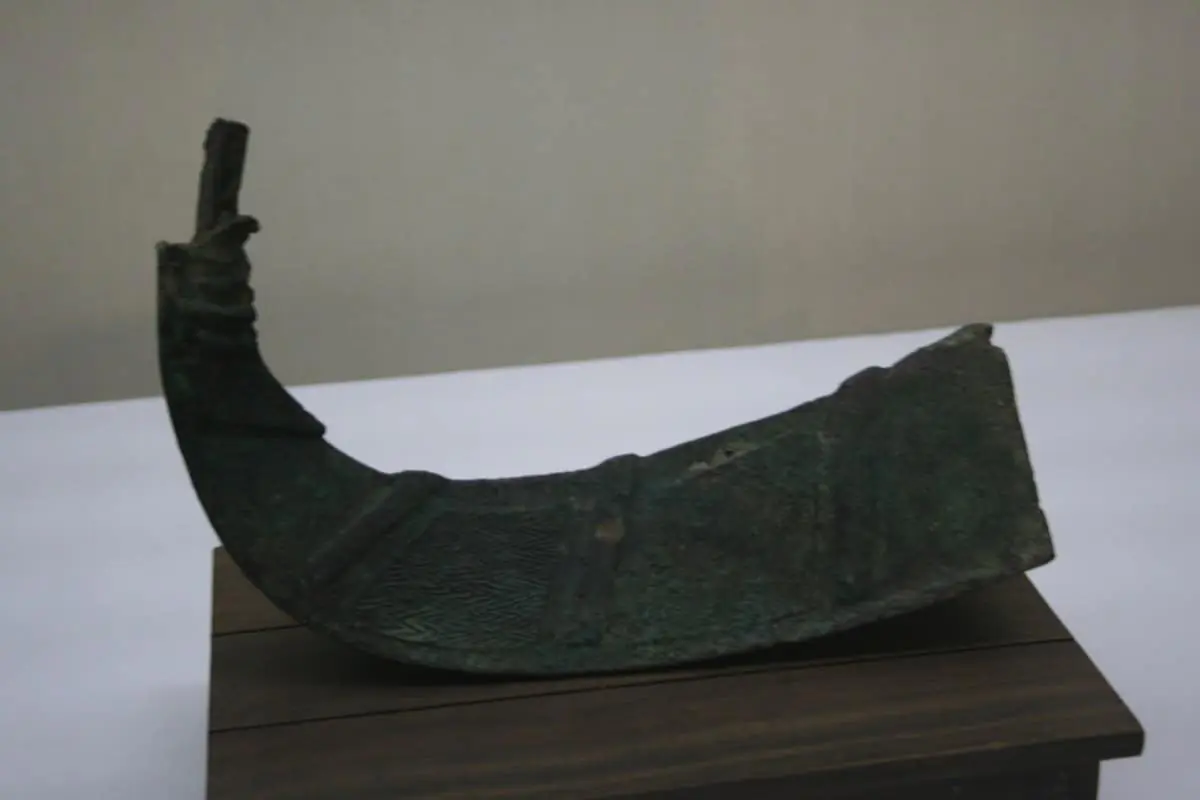
A Name That Carries a Civilization
The Xie (谢) surname — the 23rd most common in China, carried by approximately ten million people worldwide — holds one of the most concentrated legacies in Chinese history. In the span of 2,800 years, members of this single family line saved a dynasty from annihilation, founded Chinese landscape poetry, produced the most famous female literary voice of the medieval era, and built one of China’s most exquisite architectural fusions — a garden that still draws millions of visitors to a quiet corner of Kaiping (开平) in Guangdong Province.
Three arcs define the Xie story. The first is aristocratic: the Chen Commandery Xie clan (陈郡谢氏, Chénjùn Xiè shì) of the Eastern Jin dynasty, who — together with the Langya Wang clan (琅琊王氏) — dominated Chinese politics and culture so completely that “Wang-Xie” (王谢) became the Chinese language’s permanent shorthand for old-money prestige. The second is literary: Xie Lingyun (谢灵运), the founder of Chinese landscape poetry (山水诗, shānshuǐ shī); Xie Daoyun (谢道韫), the “willow catkin talent” (咏絮之才, yǒngxù zhī cái) whose poetic metaphor defined female genius for centuries; and Xie Tiao (谢朓), whose verses made Li Bai nostalgic four hundred years later. The third is diasporic: the Tangkou (塘口) Xie families of Kaiping who emigrated to Chicago and San Francisco in the late 19th century, built a transnational herbal medicine and trade empire, and sent their fortune home in the form of Li Garden (立园, Lì Yuán) — a 19,600-square-meter fusion of Chinese garden aesthetics and Western architecture that now stands as a national 5A heritage site.
The Xie surname is not merely a family name. It is a case study in how Chinese civilization encodes memory, transmits prestige, and survives dispersal — the same phenomenon that shaped every surname in the Wuyi diaspora. This is the story of how one surname traveled from a Zhou dynasty fiefdom in Henan to a Chicago herb shop to a UNESCO heritage village — and what that journey tells us about all of us who carry ancestral names across oceans.
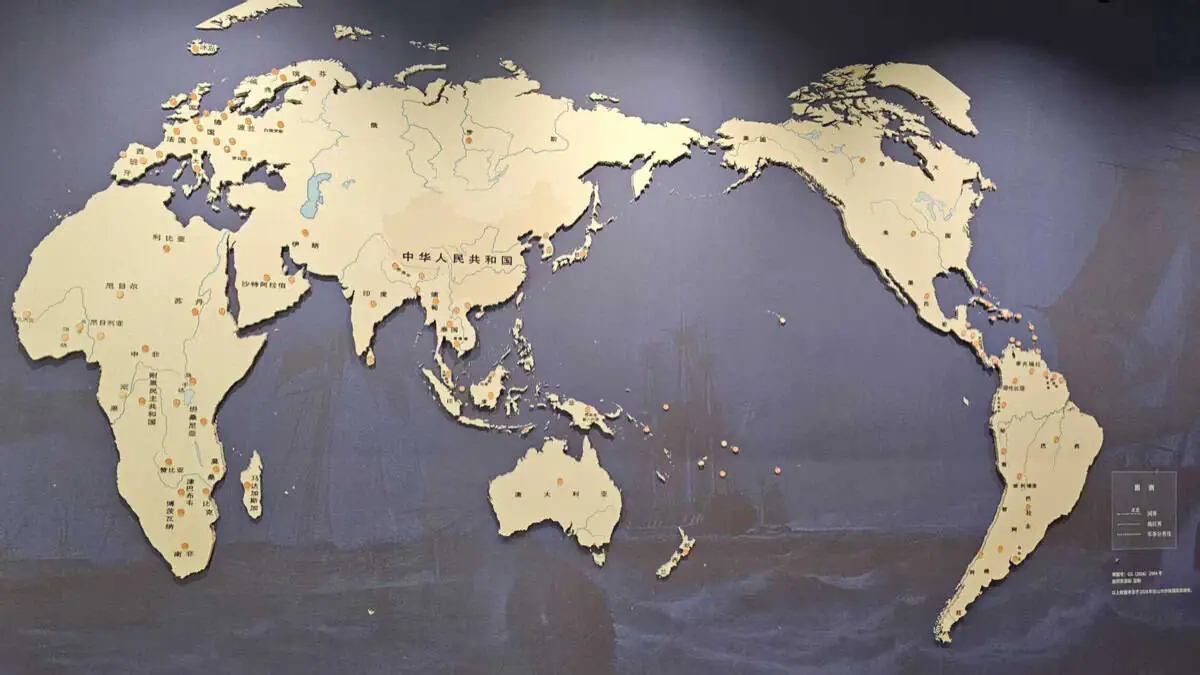
The Roots — Shen Bo and the State of Xie
The Xie surname begins with a royal marriage and a military campaign. Around 800 BCE, during the reign of King Xuan of Zhou (周宣王, Zhōu Xuān Wáng), the Zhou dynasty court faced persistent threats from border tribes. The king’s brother-in-law — Shen Bo (申伯, Shēn Bó), brother of Queen Jiang — distinguished himself in pacifying these frontier conflicts. As reward, King Xuan enfeoffed Shen Bo with territory in the south, establishing the State of Xie (谢国, Xiè Guó) in the region of modern-day Nanyang (南阳), Henan Province.
The State of Xie survived for approximately one century. In 688 BCE, the expanding State of Chu (楚国) absorbed it. But the name endured. Shen Bo’s descendants, now subjects of Chu rather than Zhou, adopted Xie as their surname — transforming a territorial designation into a permanent marker of identity. This pattern — a fiefdom extinguished, a surname born — is one of the primary engines of Chinese surname formation during the Spring and Autumn period (770-476 BCE), a process that also produced surnames like the He (何) and many others.
The Xie genealogical tradition records two additional origin streams. One traces descent through the Jiang (姜) surname to the legendary Yan Emperor (炎帝, Yán Dì) — placing the Xie within the ancient Huaxia lineage framework. Another, recorded in the Old Book of Tang (《旧唐书》), documents the sinicization of the Zhile (直勒) clan of the Xianbei (鲜卑) people, who adopted Xie as their Chinese surname during the Northern Wei dynasty (386-534 CE). These multiple origins reflect a broader truth about Chinese surnames: they are not single threads but braided cords, absorbing and integrating diverse populations over millennia.
The Xie ancestral halls today carry two primary names. An Jin Tang (安晋堂, “Pacifying Jin Hall”) commemorates Xie An’s (谢安) salvation of the Eastern Jin dynasty. Bao Shu Tang (宝树堂, “Precious Tree Hall”) evokes the flourishing branches of the Xie family tree. Both names point forward — to the era when the Xie would become, for a time, the most powerful family in China.
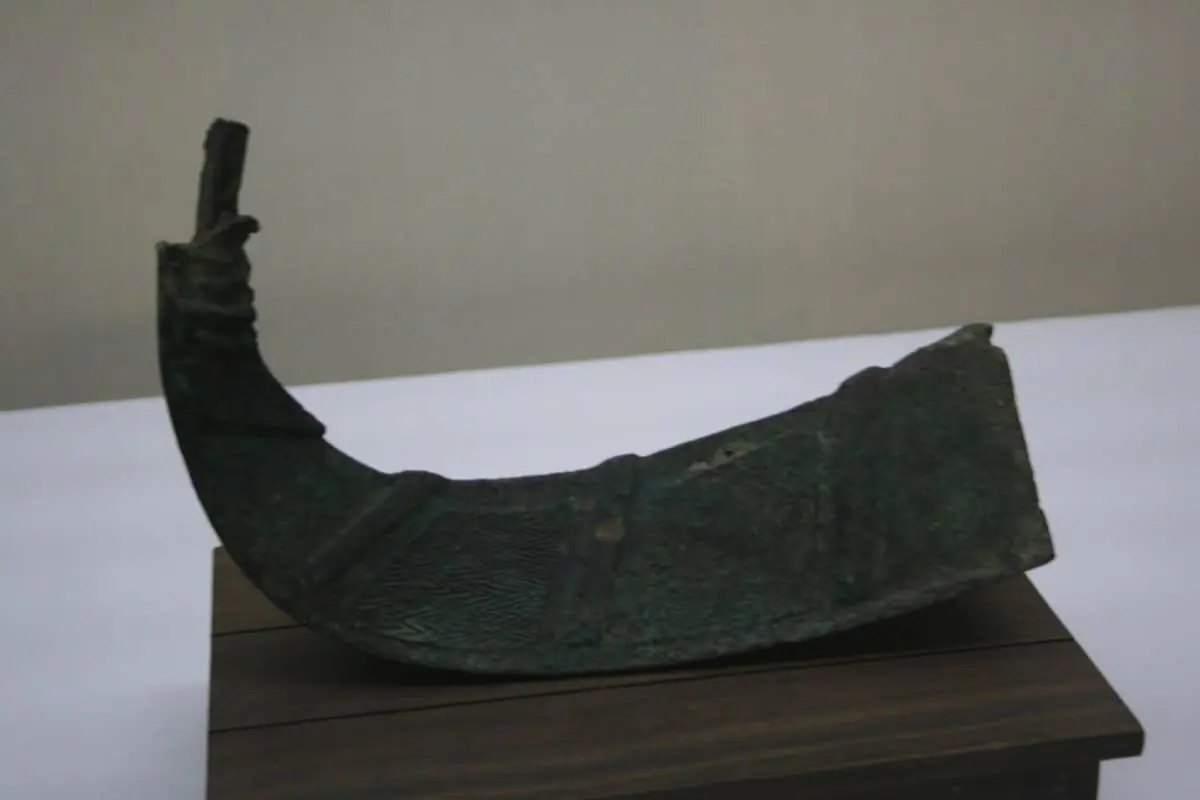
The Golden Age — Xie An and the Battle of Fei River
If one moment defines the Xie clan’s place in Chinese history, it is the Battle of Fei River (淝水之战, Féishuǐ zhī zhàn) in 383 CE. The Former Qin dynasty, under the ambitious ruler Fu Jian (苻坚), had unified northern China and now turned south with a reported force of 800,000 troops — a number that modern historians believe included logistical support but still represented overwhelming numerical superiority. The Eastern Jin dynasty faced existential threat.
Xie An, then serving as Prime Minister, was the man the dynasty turned to. He had spent years in reclusion at Dongshan (东山), building a reputation as a cultured scholar who preferred poetry to politics — giving the Chinese language the idiom “东山再起” (dōngshān zài qǐ, “comeback from Dongshan”) to describe a return to public life after retirement. But Xie An was no passive aesthete. He understood power, faction management, and military strategy.
His response to the crisis was not to centralize command but to deploy his family. He appointed his brother Xie Shi (谢石) as Supreme Commander, his nephew Xie Xuan (谢玄) as front-line commander of the elite Beifu Army (北府兵, Běifǔ Bīng), and his son Xie Yan (谢琰) as a field general. The Xie clan would fight this battle as a family.
The numbers were daunting: approximately 80,000 Eastern Jin troops against a Former Qin force several times larger. What followed was one of history’s most successful exercises in psychological warfare. Xie Xuan sent a message to Fu Jian proposing that the Former Qin army retreat slightly, allowing Eastern Jin forces to cross the Fei River for a decisive engagement. Fu Jian agreed — a catastrophic miscalculation. As the Former Qin army began its withdrawal, the movement triggered confusion, then rumor, then panic. Soldiers who thought they were executing an orderly redeployment believed they were fleeing a defeat. The retreat became a rout.
Two Chinese idioms were born from the chaos: “草木皆兵” (cǎo mù jiē bīng, “every bush and tree looks like an enemy soldier”) and “风声鹤唳” (fēng shēng hè lì, “hearing the enemy in the wind and bird calls”). Both describe the psychological terror of an army that had lost faith in its own survival.
Xie An’s composure during the crisis became legendary. When a messenger arrived with news of the victory, Xie An was in the middle of a chess game. He read the report, set it aside without comment, and continued playing. Only when his opponent asked what the message contained did he reply, matter-of-factly: “The children have defeated the enemy” (小儿辈遂已破贼). After the game ended, he excused himself — and reportedly danced with such joy crossing the threshold that the wooden clogs on his feet broke.
The Fei River victory preserved the Eastern Jin dynasty and, by extension, the southern Chinese civilization that would eventually produce the Tang dynasty’s cultural golden age. It also cemented the Xie clan’s status as the indispensable family of the Eastern Jin state. For the next century, the phrase “Wang-Xie” — pairing the Xie with the slightly older Langya Wang clan of the great calligrapher Wang Xizhi (王羲之), whose Wang (王) surname story is itself extraordinary — would define aristocratic prestige. When the Tang poet Liu Yuxi (刘禹锡) wrote “旧时王谢堂前燕,飞入寻常百姓家” — “the swallows that once nested in the halls of Wang and Xie now fly into the homes of common folk” — he was mourning the disappearance of a world, and immortalizing the Xie name in Chinese literary memory for the next 1,200 years.

Literary Genius — The Xie Contribution to Chinese Letters
The Xie clan’s cultural output in the four centuries following Xie An represents one of the most concentrated bursts of literary genius from a single family in Chinese history.
Xie Lingyun (谢灵运, 385-433 CE), grandson of the Fei River commander Xie Xuan, is recognized as the founder of Chinese landscape poetry. Before Xie Lingyun, Chinese poetry described nature as backdrop or metaphor. Xie Lingyun made nature the subject — merging personal emotion with detailed observation of mountains, rivers, forests, and seasons in ways that had no precedent. His style was so revolutionary that it spawned its own genre: 山水诗 (shānshuǐ shī, “mountains-and-waters poetry”), which would dominate Chinese literature for centuries through Wang Wei, Li Bai, Du Fu, and beyond.
Xie Lingyun was also famous for his arrogance. His self-assessment — “天下才共一石,曹子建独得八斗,我得一斗,自古及今共用一斗” (“The world’s talent totals one dan — Cao Zhi got eight dou, I got one dou, and everyone else from antiquity to now shares the remaining one dou“) — is simultaneously one of the most immodest and most quotable boasts in Chinese literary history. His life ended tragically: implicated in political rebellion, he was executed at age 48. But his poetic revolution outlived him by 1,600 years and counting.
Xie Daoyun (谢道韫), Xie An’s niece, was the other Xie genius of the Eastern Jin — and perhaps the most famous female literary figure of medieval China. When she was a child, her uncle Xie An asked the gathered children to describe falling snow. Her cousin answered: “撒盐空中差可拟” — “it can be compared to salt scattered in the air.” Xie Daoyun replied: “未若柳絮因风起” — “not as good as willow catkins rising on the wind.” The comparison — lighter, more organic, capturing the upward drift of snowflakes rather than their downward fall — was so perfect that “咏絮之才” (yǒngxù zhī cái, “willow catkin talent”) became the standard Chinese compliment for female literary brilliance. She later married Wang Ningzhi (王凝之), son of Wang Xizhi — a union that literalized the Wang-Xie alliance in matrimony. Her story echoes the hidden role of women in the Wuyi heritage — brilliance acknowledged by history but often overshadowed by male counterparts.
One generation later came Xie Tiao (谢朓, 464-499 CE), known as “Little Xie” (小谢) to distinguish him from Xie Lingyun. A Southern Qi dynasty official and poet, Xie Tiao refined the landscape tradition into something lighter and more musical — poems that captured the clarity of rivers and the melancholy of travel with an economy his predecessors lacked. Li Bai was his most famous admirer. “解道澄江净如练,令人长忆谢玄晖” — “Who can describe the clear river like white silk? It makes me always remember Xie Tiao.” A Tang dynasty immortal, nostalgic for a Southern Qi poet dead for 250 years.
In roughly four centuries — from Xie An’s political prime to Xie Tiao’s execution at age 36 — the Xie clan produced: China’s most celebrated statesman-general, its first landscape poet, its most famous female literary prodigy, and the poet Li Bai wished he could meet. Most families would count themselves fortunate to produce one such figure in four millennia.

The Village — Cangdong and 700 Years of Kaiping Settlement
The Xie story in Kaiping begins around 1300 CE, during the Yuan dynasty (元朝). Xie Rongshan (谢荣山), a migrant from Xinhui (新会), settled at a place called Tanbian Yuan (潭边院) in what is now Tangkou Town (塘口镇), Kaiping City. The settlement he founded — originally called Cangqian Village (仓前村, “Front Granary Village”) — sat on the fertile floodplain of the Tan River (潭江), land that could sustain rice agriculture and, eventually, a large lineage.
Cangdong Village (仓东村, “East Granary Village”) emerged from a third-generation split. The founding ancestor’s descendants divided: Xie Houjian (谢侯坚) and his line settled the western side (Cangxi/仓西), while Xie Houcheng (谢侯成) and his descendants occupied the eastern side (Cangdong/仓东). For the next 700 years — through the Ming dynasty, the Qing, the Opium Wars, the emigration waves, the Republic, the Japanese occupation, the Mao era, and Reform and Opening — the Xie clan continuously inhabited this land. Twenty-five generations and counting.
Cangdong is not a museum. It is a living village where Xie descendants still farm, still sweep ancestral graves at Qingming, still maintain the genealogical records (族谱, zúpǔ) that trace their lineage back to Xie Rongshan and, through him, to the Chen Commandery Xie of the Eastern Jin. The village is part of the broader qiaoxiang (侨乡) landscape of Kaiping where ancient watchtowers and heritage villages dot the countryside — each one a monument funded by overseas remittances, the same diaspora wealth that built the Wuyi surname compass of interconnected clans.
In 2021, Cangdong received UNESCO Asia-Pacific Heritage Award recognition. Wuyi University professor Tan Jinhua (谭金花) had launched the “Cangdong Plan” (仓东计划) in the 2010s — a community-based heritage conservation project that preserved not only the village’s distinctive qiaoxiang architecture (侨乡建筑, qiáoxiāng jiànzhù) but also its oral history, its agricultural practices, its festivals. The UNESCO award recognized something rare: heritage conservation that kept the community inside rather than displacing it.
The Builder — Xie Weili and Li Garden
In the 1870s, a Kaiping native named Xie Yueyou (谢曰佑) arrived in Chicago and opened a small herbal medicine shop. He named it Zhi He Tang (致和堂) — “Hall of Achieving Harmony.” Like thousands of other Wuyi (五邑) emigrants, he had traveled via the credit-ticket system (赊单制, shēdān zhì), where a labor broker advanced his passage cost against future wages. American immigration law had not yet excluded Chinese laborers — that would come in 1882 — and Chicago’s growing Chinese community needed the traditional medicines that only a trained herbalist could provide.
Zhi He Tang survived its founder. After a fire destroyed the original shop, Xie Yueyou’s sons — Xie Shengpan (谢圣泮), Xie Shengcan (谢圣灿), Xie Shengjiong (谢圣炯), and Xie Shengdong (谢圣栋) — rebuilt the business in Chicago and expanded to San Francisco under the name Guang He Hao (广和号). The Xie family enterprise now spanned herbal medicine, clothing, trade, and — critically — remittance services. Zhi He Tang became one node in the vast qiaopi (侨批) network that moved money and letters between American Chinatowns and Wuyi villages — the same system documented in the history of qiaopi remittance letters.
Around 1906, Xie Shengxiang (谢圣湘) — one of the brothers — systematically sponsored the immigration of his siblings to the United States, creating the first generation of the Xie Riyou family’s American presence. This chain migration pattern was the engine of Wuyi emigration: one pioneer established a foothold, then pulled relatives across the Pacific one by one.
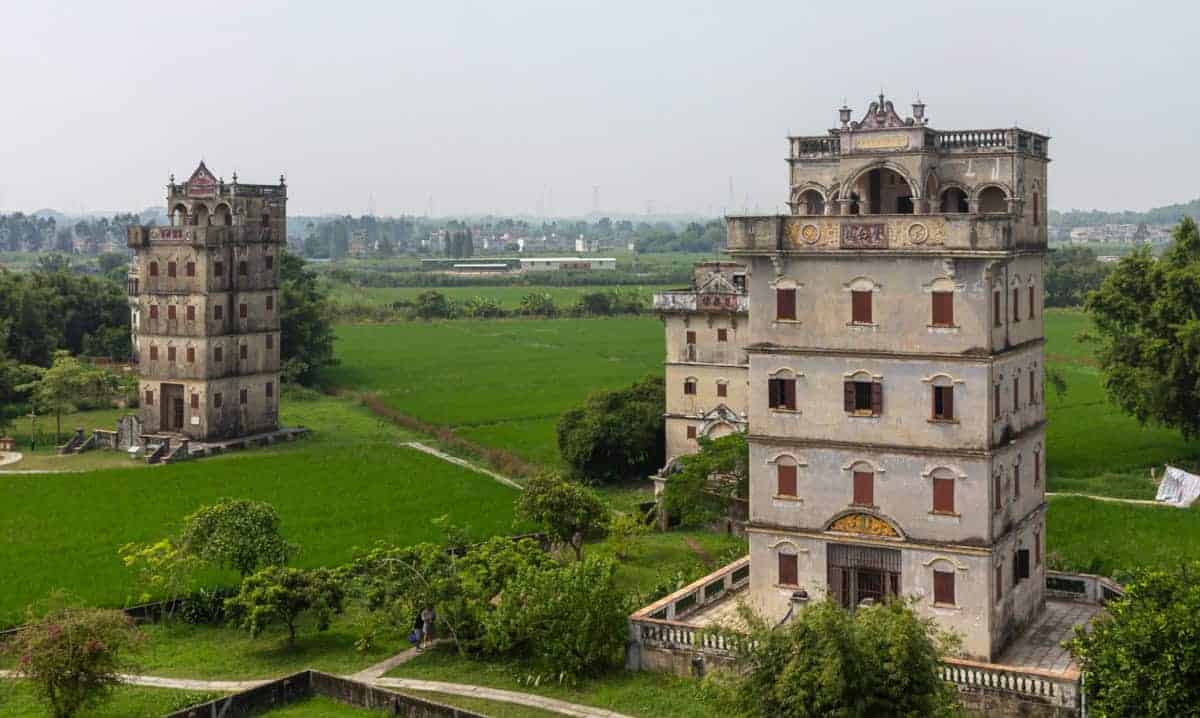
Xie Weili (谢维立), born in Kaiping and taken to America as a child, was the next generation. In 1926, following his father’s instructions, he returned to Kaiping with a mission: build a family estate worthy of the Xie name. Over the next decade — 1926 to 1936 — Li Garden (立园) rose on 19,600 square meters of Tangkou land.
Li Garden is not merely large. It is a deliberate architectural argument for cultural fusion. Traditional Chinese garden aesthetics — rockeries, pavilions, winding corridors — share space with Lingnan water-town features (canal-fed ponds, arched bridges) and unmistakably Western elements: European-style villas with columns, balustrades, and stained glass. The name “Li” (立) carries the Confucian weight of “立树立人” — “establish oneself, establish others.”
Today Li Garden is a national 5A tourist attraction, one of Guangdong’s Four Great Gardens, and a UNESCO World Heritage buffer zone within the Kaiping Diaolou and Villages site. Xie Weili’s ancestral home still stands in Cangdong, a five-minute walk away. His grandson Xie Zhiwei (谢志伟), a designer living in New York, has donated family artifacts — including the Zhi He Tang shop sign and his grandmother’s jade necklace — to the Kaiping Museum.

Letters Across Oceans — Qiaopi and the Women Who Waited
In 2024, a remarkable artifact surfaced in the Chinese antiques market. It was a birthday banner (寿幛, shòuzhàng) — embroidered silk, late Qing or early Republic era — covered with the names of well-wishers. Among them: dozens of Xie and Guan clan members. Wuyi University professor Liu Jin (刘进) identified it as a 91st-birthday gift sent to an elderly woman in Tangkou, Kaiping, by family members scattered across the Pacific.
The woman’s name is not recorded in the banner itself. She is identified only by her relationships — mother, grandmother, matriarch — and by the ocean her family crossed to honor her. But the artifact tells us something essential about the Xie diaspora experience: the women who stayed.
While Xie men built herb shops in Chicago and gardens in Kaiping, their wives — the jinshanpo (金山婆, “Gold Mountain wives”) — managed households, raised children, supervised farm labor, and maintained ancestral rites in qiaoxiang villages. They lived in a permanent state of waiting. Letters arrived via the qiaopi system — handwritten, carrying remittances and instructions alongside affection and guilt. A letter might arrive once a month, or once a season, or not at all. Some women waited for husbands they had married by proxy and never met in person — a shared experience across the Gold Mountain wives of the Wuyi diaspora.
The qiaopi system was the emotional infrastructure of the Wuyi diaspora. The letters were not just financial instruments — though the remittances they carried funded everything from daily rice to Li Garden’s construction. They were the only thread connecting two worlds: Chicago’s Chinatown and Kaiping’s rice paddies. A qiaopi letter typically opened with a ritual inquiry about health, moved through practical remittance instructions, and closed with the ache of separation. Some letters contained detailed instructions about ancestral hall repairs or tomb-sweeping schedules. Others simply said: I am still here. Are you?
The birthday banner’s survival — and its journey from a Tangkou home to a museum collection — is itself a small miracle. It survived the Japanese occupation, the land reform campaigns, the Cultural Revolution’s destruction of “feudal” artifacts, and decades of neglect. Today it sits in the Kaiping Museum, alongside Xie Weili’s Zhi He Tang shop sign and his wife’s jade necklace, telling a story that qiaopi scholarship has only recently begun to recover: the story of the women who made diaspora possible by staying behind.

Revolution and Return — The 20th Century Xie
The 20th century scattered the Xie clan across competing political commitments. Xie Chuang (谢创), born in Tangkou’s Qingmin Village (庆民村), took a path radically different from his Chicago cousins. He studied in the United States, then traveled to the Soviet Union for revolutionary training. Returning to China, he became one of the key figures in rebuilding the Chinese Communist Party’s Kaiping organization and leading anti-Japanese resistance during the war.
His trajectory — America, Soviet Union, China — traces the ideological geography of the early 20th century in miniature. His former residence in Tangkou is now a Red Education Base (红色教育基地), preserving documents from his overseas studies and wartime activities. The Xie clan, like China itself, contained multitudes: capitalists and revolutionaries, emigrants and returnees, those who built fortunes abroad and those who stayed to fight for the homeland. The tensions between these paths — between the diaspora experience shared by surnames like the He (何) and those who built revolution at home — are the tensions of modern Chinese history itself.
During the Cold War, from 1949 to approximately 1978, diaspora-homeland contact was largely severed. Xie families on both sides of the Pacific lost touch for an entire generation. Letters stopped. Remittances ceased. The qiaopi system, already declining with the rise of modern banking, essentially ended. When Deng Xiaoping’s Reform and Opening policies began in 1978, Xie diaspora members who returned to Kaiping found villages that had aged without them — ancestral halls damaged or repurposed, genealogical books hidden or destroyed, elderly relatives who had given up hope of reunion.
The returns began slowly. A visit. A donation. A family reunion. By the 2000s, roots tourism had become a recognized phenomenon, and Cangdong — with its intact village fabric and living community — became a primary destination. Xie Zhiwei, Xie Weili’s New York-based grandson, began donating family artifacts to the Kaiping Museum in 2018. The Zhi He Tang shop sign, after 140 years, came home.

The Living Legacy — Heritage, Roots, and Digital Reconnection
The Xie surname today is simultaneously ancient and contemporary, aristocratic and demotic, concentrated in southern China and scattered across six continents.
In Kaiping, Cangdong Village operates as a UNESCO-recognized heritage education site, hosting university students, researchers, and diaspora descendants who come to study architecture, oral history, and cultural practices. The rice paddies are still farmed. The ancestral hall still functions. The generation poem (字辈, zìbèi) — the predetermined sequence of characters used in successive generations’ given names — still allows Xie clan members meeting for the first time to recognize each other through their name structure.
In the diaspora, digital tools have transformed genealogy. DNA testing services, WeChat clan groups, and online databases allow Xie descendants worldwide to reconstruct family trees severed by paper son name changes, Cold War silence, and the ordinary erosion of immigrant memory. A third-generation Chinese American in San Francisco can now trace her lineage to a specific courtyard in Cangdong — something her grandmother, who burned family papers during the McCarthy era, could never have imagined.
The most prominent Xie diaspora figure today is arguably Xie Guomin (谢国民, Dhanin Chearavanont), senior chairman of Thailand’s Charoen Pokphand (CP) Group — one of the world’s largest agribusiness and telecommunications conglomerates. His father Xie Yichu (谢易初) emigrated from Chaoshan (潮汕) in eastern Guangdong, a different migration stream from the Wuyi diaspora but part of the same vast Xie surname network. CP Group’s reach — operations in over 20 countries, revenues exceeding $80 billion — is a reminder that the Xie clan’s journey from a Zhou fiefdom to a global enterprise is a story still being written.
But the heart of the Xie legacy is not in corporate boardrooms. It is in Cangdong. It is in the qiaopi letters preserved in museum collections. It is in the “Wang-Xie” swallows of Liu Yuxi’s poem, which still fly — not through aristocratic halls but through the homes and memories of ordinary people who carry a name that once saved a dynasty.

The Swallows Remember
The Xie surname is a case study in how Chinese civilization transmits identity across time and space. Over 2,800 years, the Xie have encoded their existence in three forms of permanence: blood (the genealogical lines preserved in village zupu), stone (Li Garden, the Cangdong ancestral hall, the diaolou watchtowers of Kaiping), and words (Xie Lingyun’s poetry, Xie Daoyun’s willow catkins, the qiaopi letters that carried longing across the Pacific).
These three forms — blood, stone, words — are the architecture of Chinese ancestral identity. Blood connects the present to the past through an unbroken chain of named individuals. Stone makes that connection visible, tangible, walkable — you can stand in the courtyard where Xie Weili planned Li Garden, touch the walls his remittances built. Words make it portable: a poem, a letter, a surname carried in memory across an ocean.
The Xie story is not unique in its broad contours. Every Chinese surname carries a migration arc, an ancestor who distinguished themselves, a village left behind — the same arc traced by the Deng (邓) surname, the Feng (冯) surname, and every other name in the Wuyi surname compass. What makes the Xie story extraordinary is its concentration — the density of achievement packed into a single family line across three millennia — and its documentation: the poetry, the architecture, the qiaopi letters, the UNESCO awards, the museum artifacts that make 2,800 years of history tangible rather than abstract.
Liu Yuxi’s swallows were right, but not in the way he meant. They did not simply leave the halls of Wang and Xie for the homes of common folk. They multiplied. Every Xie descendant in San Francisco, in Bangkok, in Sydney — every diaspora visitor who walks the lanes of Cangdong looking for a courtyard their great-grandfather described in a letter — is one of those swallows, still flying, still remembering.

Sources
- 百度百科 — “谢姓” (Baidu Encyclopedia, Xie Surname entry). Comprehensive surname origin, distribution, and notable figures. https://baike.baidu.com/item/谢姓
- 江门市人民政府 — “仓东遗产教育基地获联合国教科文组织亚太遗产中心评选” (Jiangmen Municipal Government, 2023). Cangdong UNESCO recognition. http://www.jiangmen.gov.cn
- 开平市人民政府 — “开平碉楼保育与发展计划——仓东教育基地简介” (Kaiping Municipal Government, 2015). Cangdong village history and Xie lineage data. http://www.kaiping.gov.cn
- 江门市人民政府 — “致和堂牌匾和立园园主夫人谢余瑶琼的翡翠珍珠项链” (Jiangmen Municipal Government, 2024). Xie family Zhi He Tang business history.
- 江门市人民政府 — “立园” (Jiangmen Municipal Government, 2023). Li Garden official documentation.
- 江门市人民政府 — “谢创故居红色教育基地” (Jiangmen Municipal Government). Xie Chuang revolutionary history.
- 开平市人民政府 — “谢志伟先生捐赠文献资料” (Kaiping Municipal Government, 2018). Xie Zhiwei artifact donation.
- 国务院侨务办公室 — “打造华侨文化品牌” (Overseas Chinese Affairs Office, 2016). Cangdong heritage conservation.
- 《晋书》— 谢安传 (Book of Jin, Biography of Xie An). Primary source for Xie An’s life and Fei River campaign.
- 刘禹锡 — 《乌衣巷》 (Liu Yuxi, “Black Clothes Lane”). Tang dynasty poem.
- Madeline Hsu — Dreaming of Gold, Dreaming of Home (Stanford University Press, 2000). Chinese Exclusion Act and transnational identity.
- 梅伟强等 — 《五邑华侨华人史》 (History of Wuyi Overseas Chinese, 2001). Foundational regional migration history.
Continue Reading
- Your Surname, Your Compass: A Guide to Wuyi Roots
- The He (何) Surname: 3,000 Years from Ancient Han State to the Wuyi Diaspora
- The Deng (邓) Surname: From Ancient Deng State to the Wuyi Diaspora
- The Wang (王) Surname: 3,100 Years from Zhou Dynasty Royalty to the Wuyi Diaspora
Stay Connected
Follow RootsOfChina on Facebook and Instagram for new article updates, behind-the-scenes from Kaiping, and stories from the Chinese diaspora.
Suggested Reading
Is this your family’s story?
Roots Of China is built from readers’ family histories. If a story here sounds like your own — a surname, a village, a journey — leave a comment below, or share your family’s story with us and we may be able to help you find your ancestral village.
