

The Yu (余) Surname: From Shaoguan Statesmen to the Wuyi Diaspora
A Statesman’s Name
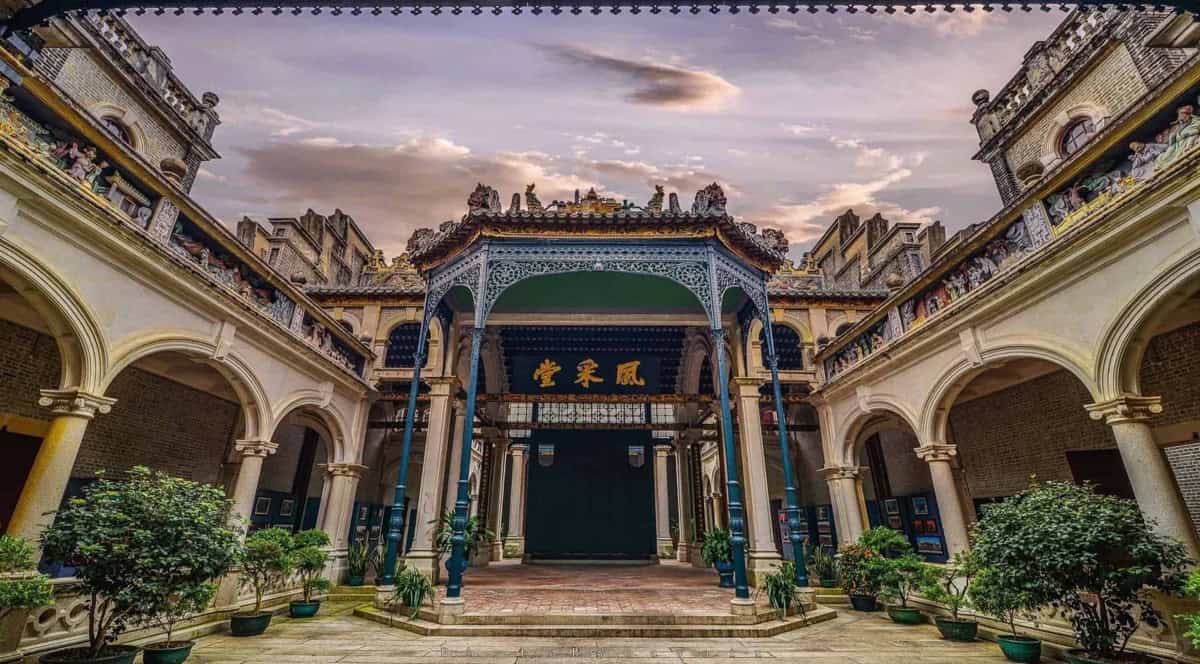
The Yu (余, Yú) surname — Yu in Mandarin, Yee in Cantonese, Eu or U in Hokkien and Teochew — traces its Wuyi roots to a Northern Song minister whose descendants built the grandest clan hall in the diaspora. That minister was Yu Jing (余靖, Yú Jìng; 1000–1064) of Shaoguan (韶关, Sháoguān), a remonstrator at the court of Emperor Renzong, three times an envoy to the Liao, and the author of a tidal study that corrected the scholars before him. His studio name, fengcai (风采, “bearing”), became the clan’s identifying word. And on the Tanjiang (潭江, Tán Jiāng) in Kaiping (开平, Kāipíng), descendants he never met raised the Dihai Fengcai Hall (荻海风采堂, Díhǎi Fēngcǎi Táng), a hybrid Chinese-Western ancestral hall paid for by the remittances of Yu clansmen overseas and reckoned the grandest clan hall the diaspora ever built.
The story behind the hall begins more than a millennium earlier. The clan’s charter account traces the surname to You Yu (由余, Yóuyú), a Spring-and-Autumn minister of Qin whose descendants took his name, with Xiapi (下邳, Xiàpī) in present-day Jiangsu as the clan’s birthplace. This is the lineage’s record of itself, not uncontested history — Yu Jing’s own preface to the Xiapi genealogy repeats it, and variants circulate, some tracing the name to the Xia dynasty, others folding 余 (Yú), its sister 佘 (Shé), 徐, and 涂 into “one house” that later divided. Ancient origins carry such layers; the honest reading keeps them as the clan tells them.
What is documented is the man. Born at Qujiang (曲江, Qǔjiāng) in Shaoguan, he passed the imperial examinations in 1024, and in 1043 stood with Ouyang Xiu, Wang Su, and Cai Xiang as one of the Four Remonstrators of the Qingli era (庆历四谏, Qìnglì sì jiàn). He measured the tides at the Pearl River mouth and the Yangtze estuary for the Chart-Order on the Tides (海潮图序, Hǎicháo Túxù), rose to Minister of Works, and was posthumously honored as Lord Zhongxiang (忠襄公, Zhōngxiāng Gōng). When Cai Xiang congratulated him with the line “all the more his bearing moves the court” (更加风采动朝端), he gave the clan the word it would build with. His Six Admonitions for Governance (从政六箴, Cóngzhèng liùzhēn) — clarity, fairness, diligence, discernment, harmony, prudence — are still displayed in the hall, underpinning its clean-governance education role.
That is the northern anchor; the southern half — a hall on the Tanjiang, its twins in San Francisco and New York, a journal still in print — is what the name built across an ocean. Among the diaspora’s surname charts, the Yu entry stands beside the Wong surname with one statesman and a hall to its name.
The Corridor South
For most Cantonese families, the road south begins at Zhujixiang (珠玑巷, Zhūjī Xiàng), a lane in Nanxiong in far northern Guangdong. The founding memory: in the Song dynasty, Luo Gui led ninety-seven households of thirty-three surnames south through the pass into the Pearl River Delta — a story listed as a provincial intangible heritage in 2022 and claimed by genealogies as far apart as Kang Youwei’s and Liang Qichao’s. The memory is real even where the history is questioned.
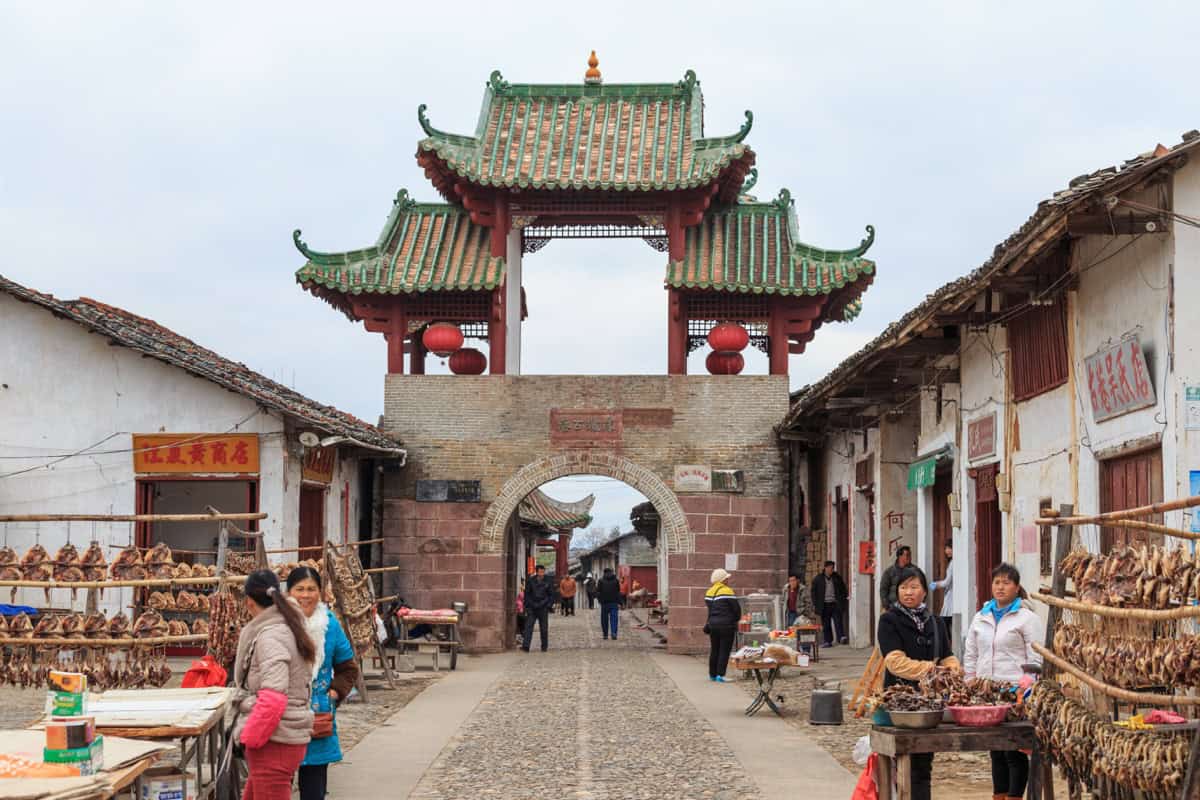
The Yu registers tell a different route. Clan records trace the lineage’s entry into Guangdong to Yu Yuanhai (余渊海, Yú Yuānhǎi), a Tang court historian who fled the Huang Chao rebellion, moving from Fujian’s Tong’an through Shaowu to Qujiang in the Guangqi era (885–888) — a century before the great Zhujixiang wave. The old Taishan county gazetteer’s list of surnames that came through Zhujixiang does not include 余; the Yu road ran through the same northern corridor but stopped earlier, at Shaoguan. Both registers deserve respect — the corridor memory that shaped Wuyi identity, and the clan’s record of its own pace.
The decisive move came in 1228, when the ninth-generation ancestor Shiji Gong (师箕公, Shījī Gōng), aged forty-six, left Qujiang for Gugang (古冈州, Gǔgāng Zhōu), the old name of the Wuyi region, settling at Hetang in Xinhui — the founding act of the Wuyi branch. The date is a corrected reading of the clan register; a rival legend sets the move after the 1279 Battle of Yamen, but the genealogy’s own account is best supported. Shiji Gong’s five sons were buried together in the Tomb of the Five Elders (五老坟, Wǔlǎo Fén) at Hetang, restored by overseas clansmen in 1923 and again in 1996. At the corridor’s northern end, the Shaoguan Fengcai Tower (风采楼, Fēngcǎi Lóu), built in 1497 to honor Yu Jing and rebuilt in 1929–1933, is the “mother tower” of every Fengcai hall on earth. The Five Counties of Guangdong lie between the two.
The Surname’s Map: Dihai and Baisha
In the Wuyi (五邑, Wǔyì) — the delta’s western five counties — two places anchor the Yu map: Dihai (荻海, Díhǎi), the river-port town on the Tanjiang at the Taishan-Kaiping border, and Baisha (白沙, Báishā) in Taishan’s northwest. “Dihai was always Yu territory,” the Kaiping government’s own history notes: founded as a market town in 1851 at the junction of the Tanjiang and the Jiaogang, it grew out of the Yu settlement of the Rulin district (儒林里, Rúlín Lǐ), where the clan has lived for over eight hundred years, before spreading into more than four hundred villages across Taishan and Kaiping.
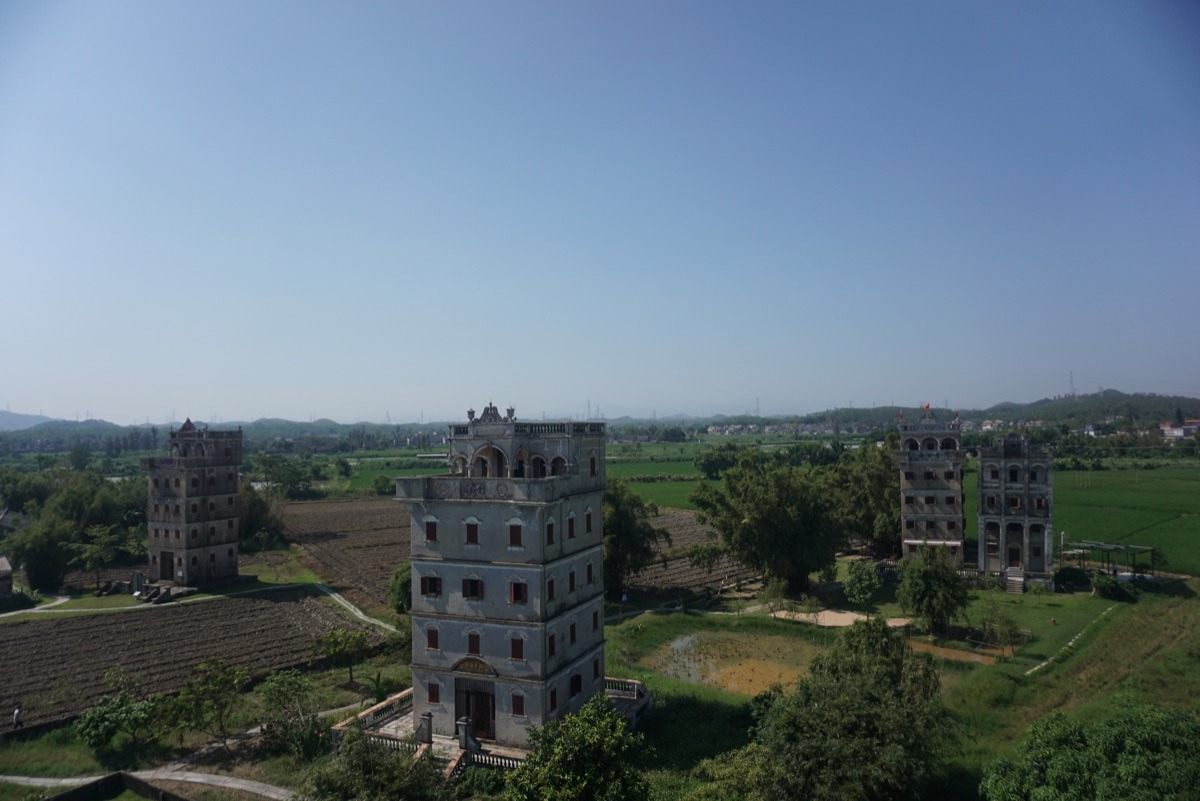
The genealogies credit the tenth-generation ancestor Hanlao with opening the great Taishan branch: his four sons seeded Rulin, Nayong, Nankeng, Guanghai, Chonglou, Taicheng, Baisha and beyond, while other lines carried the name into Shunde and Kaiping. Baisha, whose three great surnames are Huang, Ma, and Yu, counts some 130,000 overseas kin against 65,000 at home, and more than 120 watchtower-and-villa buildings raised on remittance money. Since its 2006 merger with Sanba (三八镇, Sānbā Zhèn), its village list reads like the clan registers: Libian, Wuwei, Gangmei, Chongpan.
The scale is striking, and the numbers should be read honestly: a recent partial count records more than 31,000 Yu in 203 villages across 22 Taishan townships, Sanba the densest — and clan leaders say the population overseas exceeds the one at home. These are clan counts, not census figures, but they describe a real geography of single-surname villages — which is precisely what made later emigration run along surname lines. The kinship technology that still orders it is the generation poem (字派, zìpài), a sequence of characters — 国守世传, 隆英表章 — assigned to each generation from the twenty-fourth on, so that a stranger from another continent can place himself in the family at a glance. In Taishan, people introduce themselves by village first and surname second; for a Yu, the two arrive together. The overseas-style houses of the Taishan villages and the riverfront of Kaiping’s Tangkou district still stand.
Gold Mountain
From the California gold rush of 1848, young men of Baisha and Dihai began crossing the Pacific on credit tickets (赊单制, shēdān zhì) — passage advanced against future wages, repaid through kin in remittances. The engine was the surname chain: one successful migrant financed brothers, cousins, and nephews — and because the villages were single-surname villages, every chain was surname-shaped. The hidden ports of Wuyi migration and the earlier coolie trade had opened the routes; the chains turned them into pipelines.
The waves followed the century: the gold rush, the railroad era, the repeal of exclusion in 1943 — Roosevelt told Congress America had been “greatly wronged” — and 1979’s liberalization. Through all of it ran the archetype of the Gold Mountain sojourner — 金山客 (Jīnshān kè) abroad, 金山伯 (Jīnshān bó, “gold-mountain uncle”) returned — wealth earned overseas, home always the village. Remittance capital transformed the Yu districts in turn: schools, villas, watchtowers, market towns, and at Dihai, the hall itself.
What is striking is how early the Yu clan organized overseas. San Francisco’s Xiangshan Hall Hundred-Sons Society (襄善堂百子会, Xiāngshàn Táng Bǎizǐ Huì) was formed in 1886 — twenty years before the Dihai hall was begun — pooling subscriptions to buy property at 131 Waverly Place in San Francisco (三藩市, Sānfān Shì) and found the Yu family association. No Yu-specific emigrant count exists in the public record; the regional arithmetic gives the scale — the 2009 figure for Taishan: 900,000 at home, 1.5 million overseas — and the Yu share flowed through the same remittance-funded infrastructure that reshaped the region. One village in today’s Baisha, Zhangcun Xingningli — little more than a hundred households — will return later in this story.
Exclusion and Paper Sons
The name that had survived dynasties now had to survive a border. The Chinese Exclusion Act of 1882 (排华法案, Páihuá Fǎ’àn) closed the door to laborers, and the routes bent around it — through Nanyang, Hawaii, Canada, Mexico, and Cuba, with Canada’s head tax (人头税, réntóushuì) its own burden. For the Yu men of Baisha and Dihai, as for all Taishan men, the cruelest workaround was the paper son (纸儿子, zhǐ érzi): a purchased identity, a coached script (口供纸, kǒugòngzhǐ) of memorized answers, and rehearsed interrogations at Angel Island (天使岛, Tiānshǐ Dǎo), where officers asked how many windows a house had and what the lane looked like. The 1906 earthquake made the trade possible at scale by burning the municipal birth records; Taishan leader Huang Jinquan recalled his grandfather reporting a dozen children and selling the spare “slots” to kin. That is general Taishan testimony — no Yu-named paper son has surfaced publicly — but the mechanism ran on the same surname logic as everything else.
The same earthquake destroyed the Hundred-Sons Society’s hall — while, across the ocean, the mother hall was rising on the Tanjiang. The San Francisco Yu body reorganized the same winter, rebuilt a four-story Fengcai Tower on the original site, and took the name Yu Fengcai Wuxi General Office (余风采武溪总公所), formally renamed the Yee Fung Toy Family Association (余风采总堂, Yú Fēngcǎi Zǒngtáng) in 1958. For the new arrival, the association was the welfare state — tickets, jobs, disputes, letters, and the ancestor tablets that made a rented room in the railroad-and-exclusion world feel like a lineage hall. The same pattern carried Yu men through Cuba’s contract-labor century into the United States on a second migration.
Money Plus Message: The Yinxin Letter
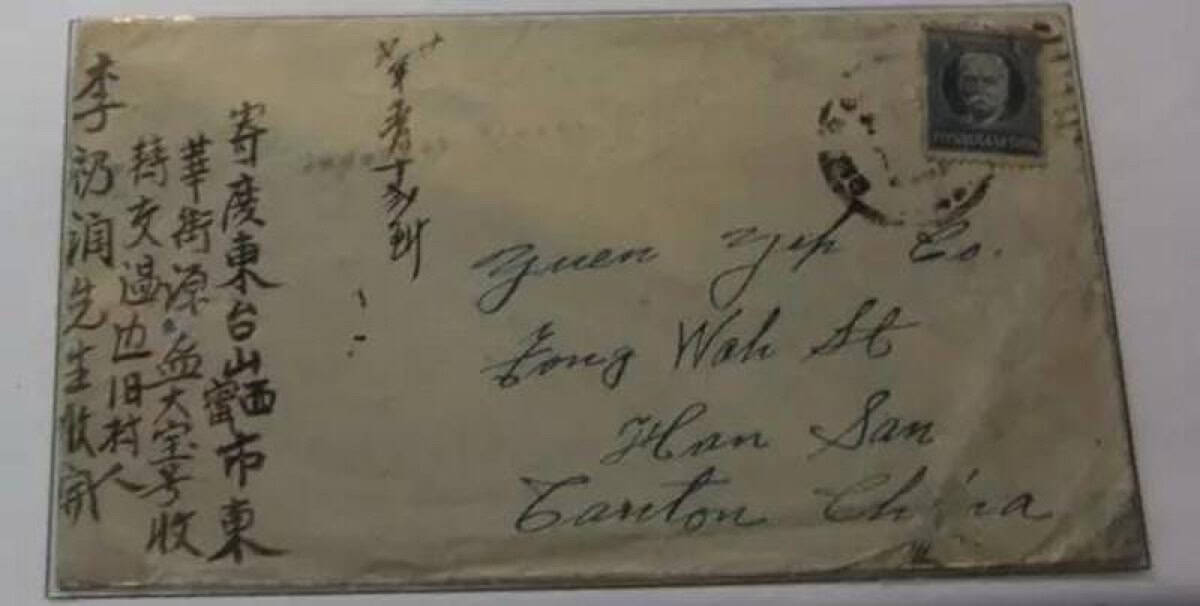
Across the ocean, the split family ran on the yinxin (银信, yínxìn) — “remittance letter,” the Wuyi name for the qiaopi (侨批, qiáopī) system in which money and message traveled in one envelope, carried by steamship lines, Hong Kong clearing houses, county agents, and finally the foot couriers (水客, shuǐkè; 巡城马, xúnchéngmǎ) who walked the last miles to the village gate. The remittance firm (批局, pījú) was bank, post office, and news service at once. In 2013 the system was inscribed on UNESCO’s Memory of the World register; the Jiangmen region alone holds nearly fifty thousand letters, the earliest known from 1875.
The Taishan Yinxin Museum (台山银信博物馆, Táishān Yínxìn Bówùguǎn) at Haikoubu displays a child’s rhyme that captures the whole moral economy: “爸爸去金山,快快要寄银,全家靠著你,有银就好寄回” — Father’s gone to Gold Mountain, hurry and send silver; the whole family depends on you — send it back when you have it. The voice is a child’s; the arithmetic is a family’s. Remittance was filial duty; the letters carried guilt, apology, and instructions in a strict hierarchy: survival, land, rites, education. “Silver is the economic lifeline; the letter is the emotional bond,” runs the museum scholarship. At the bottom of the register sits the empty letter (空批, kōng pī): the envelope that arrived with words and no money — the apology the sender could not afford to finish. No chronicle needed to record what it meant to the woman who opened it.
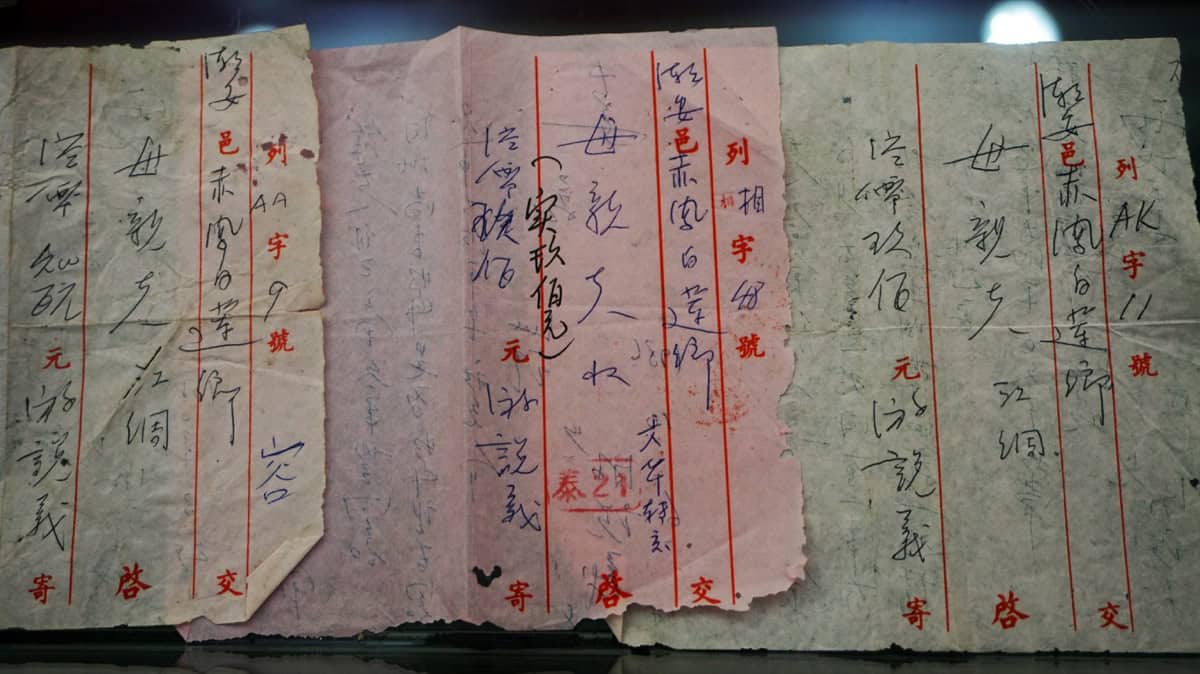
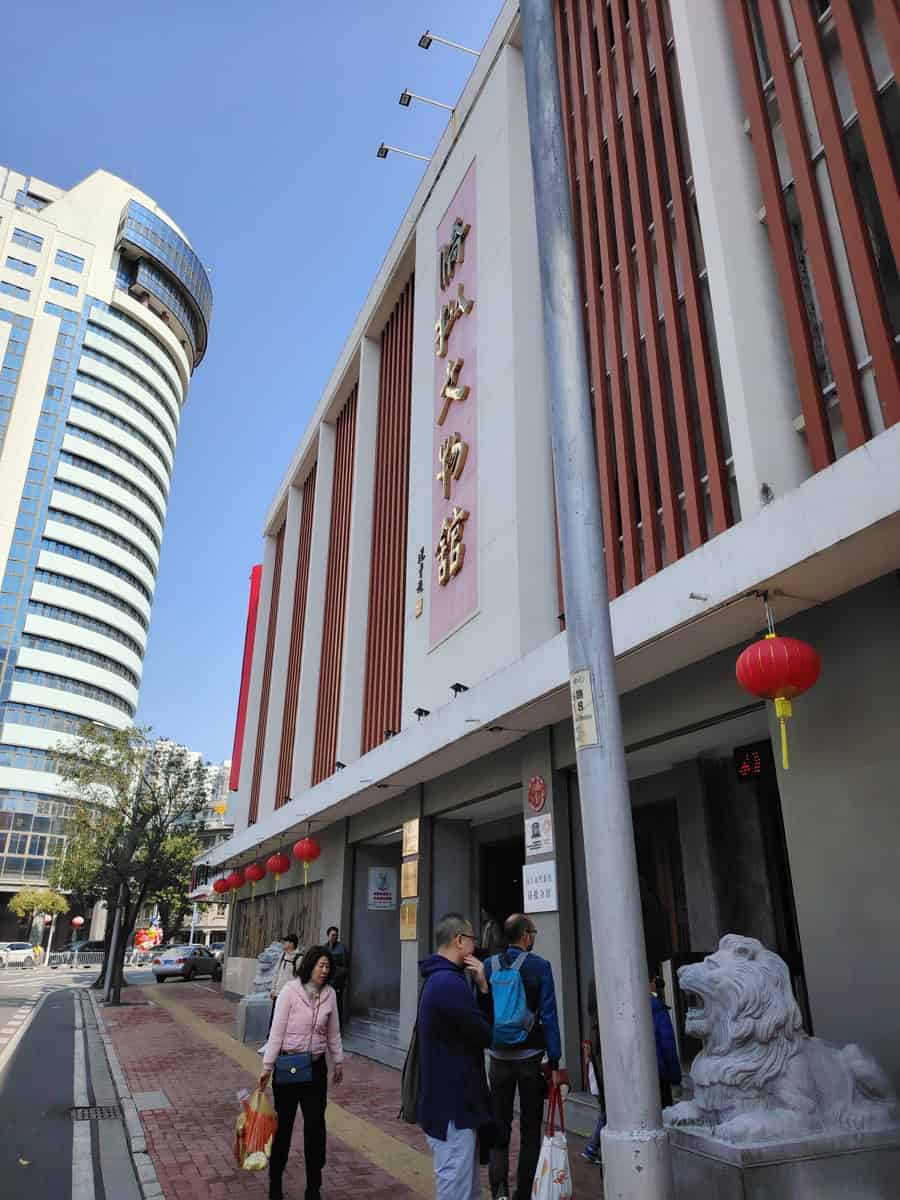
No Yu-signed remittance letter has surfaced publicly; the clan’s record lives in its journal’s obituaries and in the museum collections a descendant can visit — the silver-letter hall of the Wuyi Overseas Chinese Museum (五邑华侨华人博物馆, Wǔyì Huáqiáo Huárén Bówùguǎn) in Jiangmen, and the Haikoubu museum in Taishan, where the echoes of home are preserved letter by letter.
The Gold-Mountain Wife, and the General Who Came Home
The other half of the split household was the gold-mountain wife (金山婆, Jīnshānpó): the woman who ran the farm, household, and ancestral rites alone, raised the children, and managed the remittance money. The split household (两头家, liǎng tóu jiā) was the qiaoxiang’s normative family form — the man’s labor abroad, the woman’s authority at home, and an ocean between. Some eventually joined their husbands; many never did, the wait stretching across decades, marked in photographs sent in letters and envelopes kept in trunks. When the Depression halved remittances in the 1930s and war cut the routes after 1937, the dependence showed its dark side — the empty letter landing with the woman who had to feed the children anyway.
The village of Zhangcun Xingningli (涨村兴宁里, Zhàngcūn Xīngnínglǐ) — little more than a hundred households in the Guangda district of Dihai, today within Baisha — produced the arc’s most documented son. Yu Chengwan (余程万, Yú Chéngwàn; 1902–1955) left for normal school at Panyu, entered the first Whampoa Military Academy class, and by 1940 commanded the 57th Division. In November 1943, at the Battle of Changde (常德保卫战, Chángdé Bǎowèizhàn), he held the city with eight thousand Tiger Guard (虎贲, hǔbēn) troops for sixteen days and nights against a force several times his size, killing or wounding more than ten thousand, breaking out with a handful of men — then returning with reinforcements to recover the city.
And then the homecoming: in the 1940s, Yu Chengwan came home by boat up the Tanjiang, stepping ashore at the stone landing on the south bank of Boji Bridge (博济桥, Bójì Qiáo) — the whole village turned out, streets emptied, to meet him. The scene survives as an eyewitness account in the Fengcai Hall’s own journal; Boji Bridge and the other Yu village buildings are Taishan heritage today. It was the return every gold-mountain wife waited decades for, made flesh — the rare case where waiting ended in public triumph. For most families it never came; the record does not say which is harder. His family and village are documented; no source confirms clan-association membership, and none is claimed here. The wider legacy of Wuyi is told elsewhere; here it is enough that the homecoming was the exception that proved the rule of absence.
The Hall and the Halls
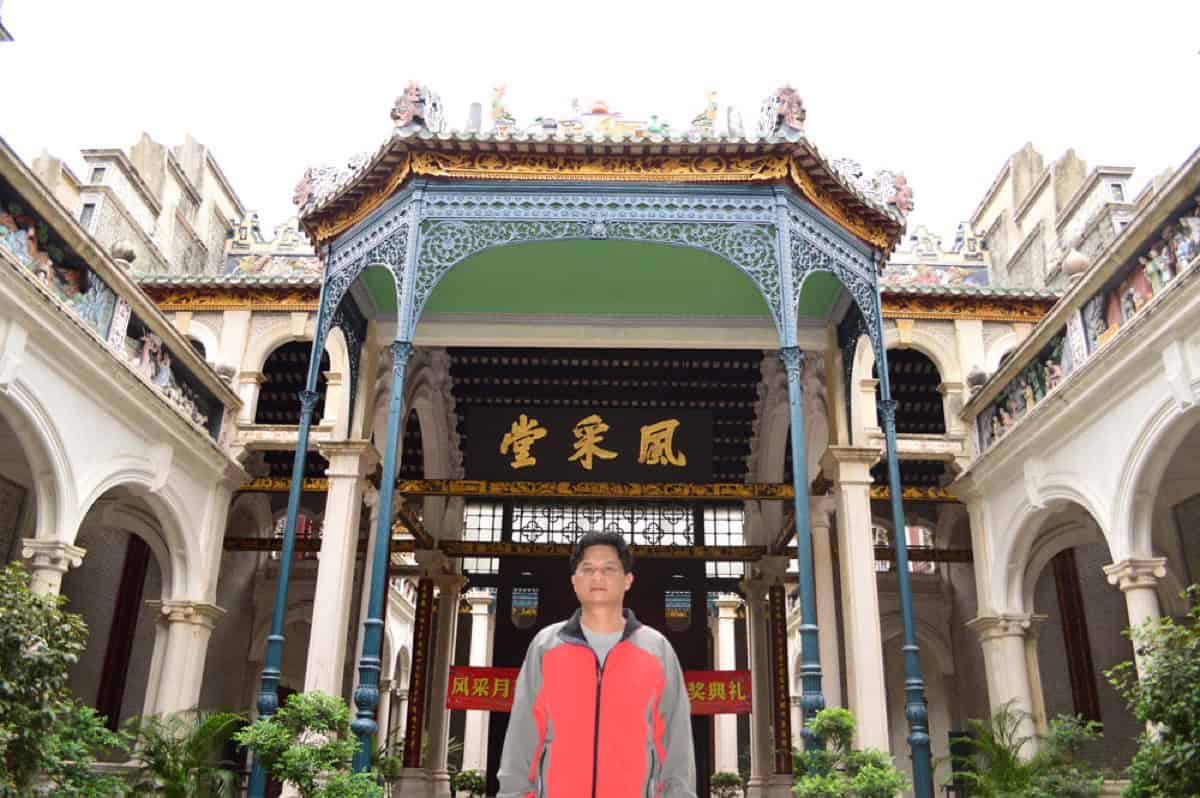
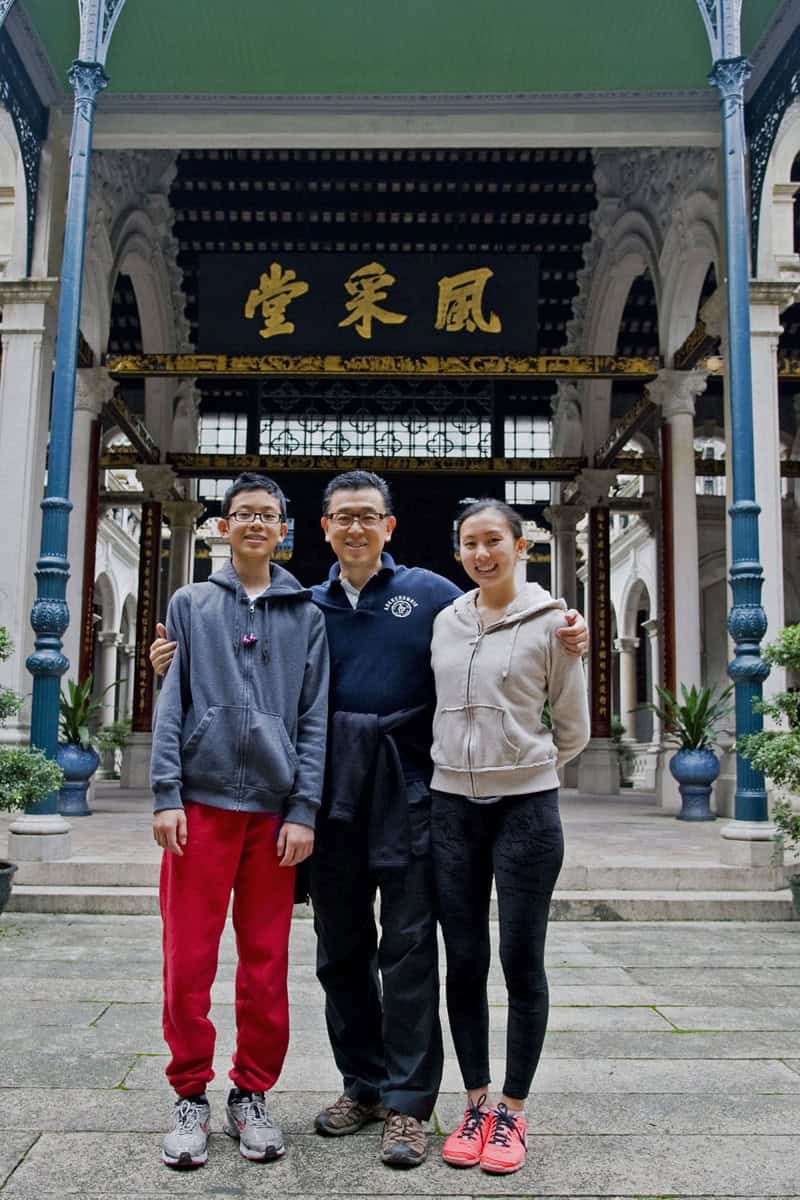
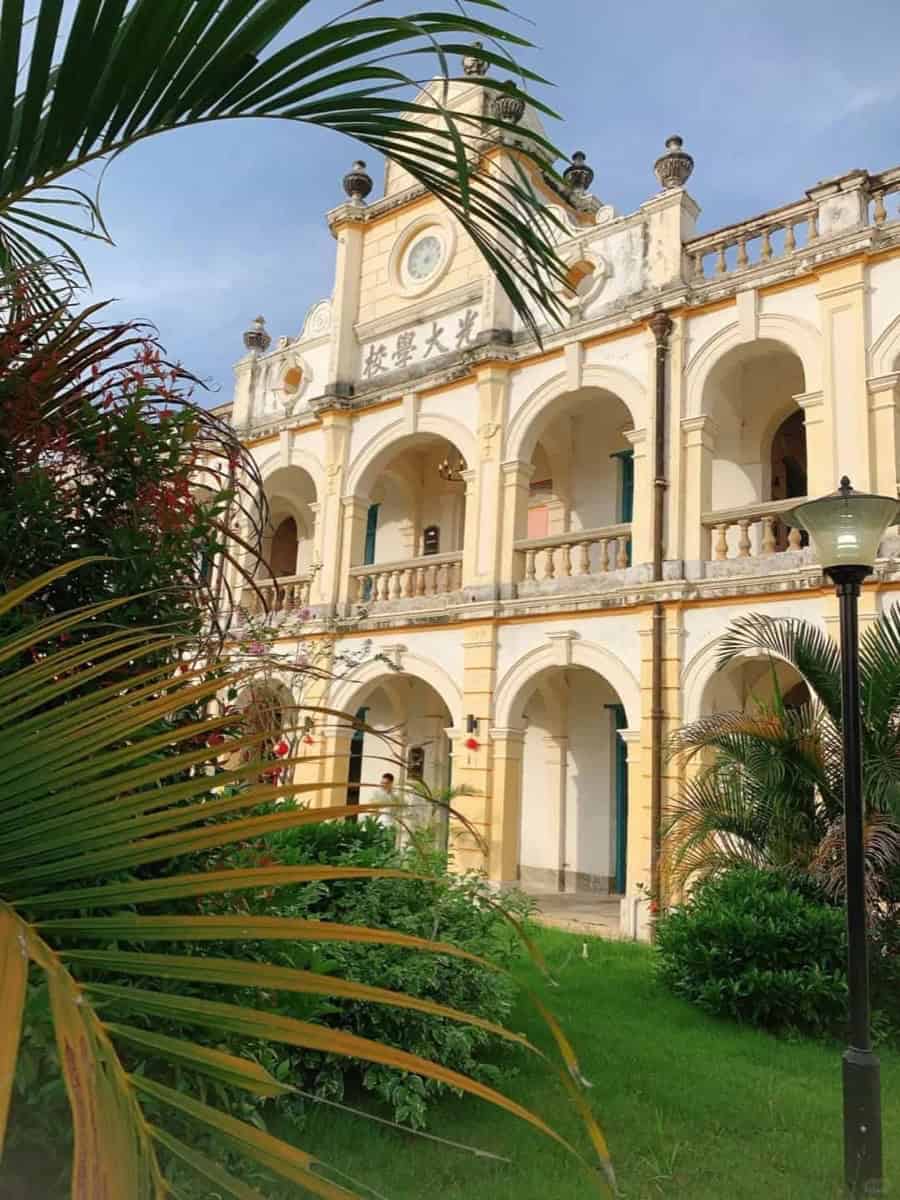
The physical anchor of the whole network stands at Dihai: the Ancestral Hall of the Worthy Yu Zhongxiang (名贤余忠襄公祠, Míngxián Yú Zhōngxiāng Gōngcí), known as the Fengcai Hall (风采堂, Fēngcǎi Táng). Begun in 1906 at the initiative of the Taishan and Kaiping Yu lineages, with clansmen of the four counties (四邑, Sìyì) and overseas answering the call, it was completed in 1914, its opening ceremony in the spring of 1915. The site at Jiaojudi on the East Embankment, ringed by water on three sides, once held an older shrine. The cost — roughly 340,000 to 380,000 silver dollars over eight to ten years; government sources disagree — was raised by subscription from Guangdong, Hong Kong, and the diaspora, gathering “the finest craftsmen of Guangdong and Hong Kong.”
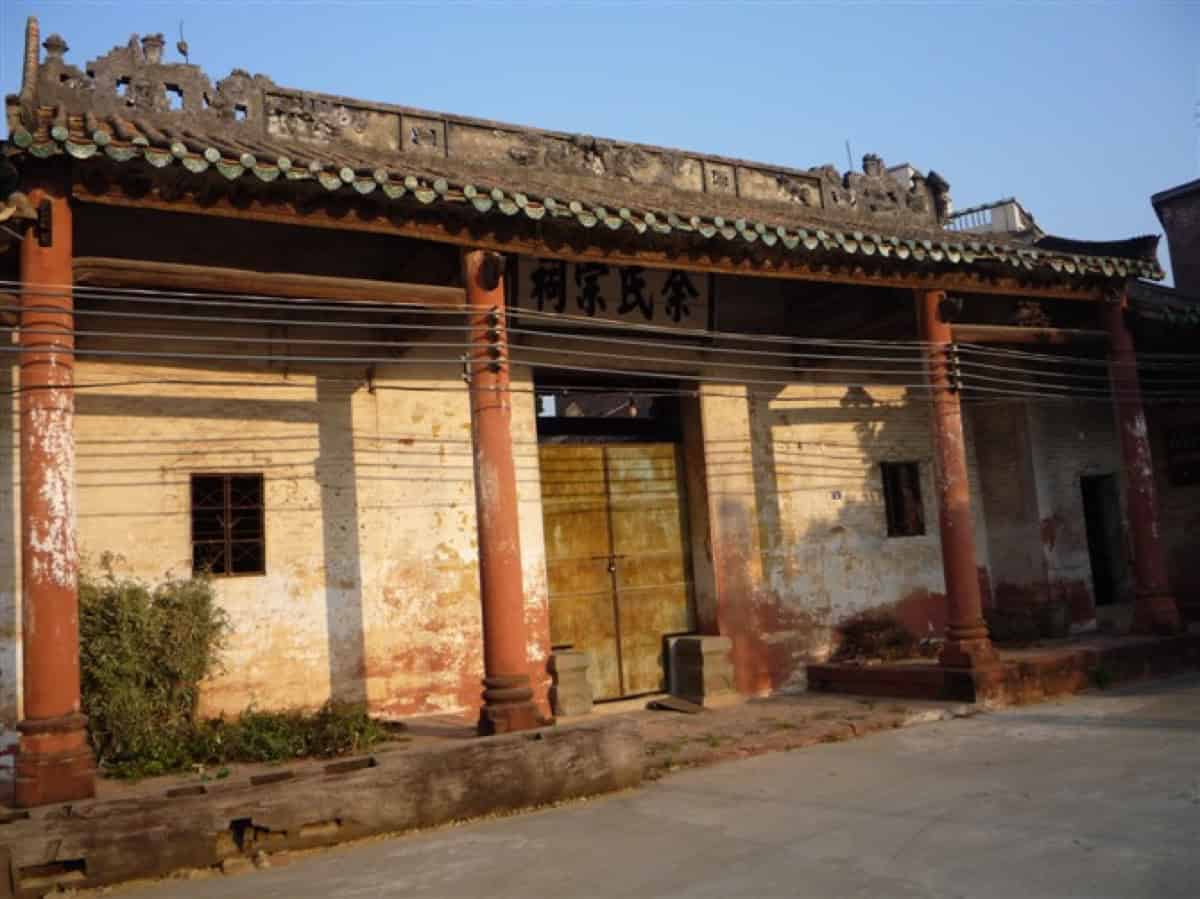
What they built is a marriage of traditions: three halls, six courtyards, fifteen chambers; brick, stone, steel, timber, and reinforced concrete; Chinese hip roofs above Corinthian and Ionic colonnades and an octagonal platform — Chinese, Greek, Roman, and Islamic elements in one building, a stone monument to the two worlds the clan straddled. Behind it, the three-story Western Fengcai Tower holds Yu Jing’s stone statue; the hall’s couplets measure the ambition: “水襟三县,名冠四贤” (Shuǐ jīn sān xiàn, míng guàn sì xián) — waters gird three counties; the name outranks the Four Worthies.
The hall was named a provincial heritage site in 2002 and, on 16 October 2019, a National Key Cultural Relic Protection Unit (全国重点文物保护单位, quánguó zhòngdiǎn wénwù bǎohù dānwèi). Between those dates it survived war and the Cultural Revolution; a restoration begun in 2007 — some six million yuan, championed by hall elder Yu Wenjin — returned it to brilliance by 2010. Its calendar is still the clan’s: each year on the seventeenth of the second lunar month the founding ancestor’s tablet is honored, echoing the 1915 enshrinement.
The overseas twin grew from the 1886 Hundred-Sons Society: the Yee Fung Toy Family Association of San Francisco counts thirteen branch halls across the United States — New York (1924), Sacramento, Boston, Chicago, Phoenix, Seattle, Stockton, and more — plus Canada, the Philippines, Malaysia, Hong Kong, and Thailand, under the World Yu Clansmen’s General Association. The branches reproduce the mother hall’s name and hierarchy; in 2010 they jointly funded a five-year restoration — “overseas we only provide the money; the repair team at home had the shrines fully restored within five years.” The hall at home and the halls abroad were government, bank, scribe, news channel, remittance transfer, and house of ancestor tablets — a surname’s de facto state, on the same machinery as the clans and brotherhoods of the Wuyi diaspora and the Guan clan’s institutions.
The Lineage as Publisher and Schoolmaster
The hall doubled as a school from the start: a private primary school operated there from the late Qing, the pattern the clan calls hall-and-school in one (祠校合一, cí xiào hé yī). In 1940 the lineage founded the private Fengcai Middle School (风采中学, Fēngcǎi Zhōngxué) in the hall; in 1952 it became public; by 2025 it had run eighty-five years and educated more than fifty thousand students, including academicians Zhen Yongsu and Yu Aibing. Nor was it alone: within five kilometers the clan founded three complete middle schools — Fengcai at Dihai, Wuxi Middle School (武溪中学, Wǔxī Zhōngxué) at Sanba in 1986, led by Hong Kong clansman Yu Shuquan with 1,500 donors and HK$13 million, and the Fengcai Overseas Chinese Middle School at Kaiping. Yu Zhenqiang (1908–1961) of Wuwei, a Hong Kong philanthropist, built a memorial middle school and an elderly home — the remittance loop personified.
The lineage’s answer to distance, though, was print. Fengcai Monthly (风采月刊, Fēngcǎi Yuèkān) was founded in February 1925 by Taishan-Kaiping Yu clansmen as a qiaokan (侨刊, qiáokān) — an overseas-Chinese clan journal, what the genre calls a “collective family letter” (集体家书, jítǐ jiāshū). It stopped and started three times: suspended during the war, revived in September 1946, suspended in 1950, revived in March 1982. Three thousand copies an issue, two hundred thousand by 2004, to more than thirty countries. Its columns — 侨邑纵横 (Qiáoyì zònghéng) on the overseas districts, 乡音族闻 (Xiāngyīn zúwén) on village news, 海外宗情 (Hǎiwài zōngqíng) on overseas kinship, 风采人物 (Fēngcǎi rénwù) on Fengcai people — kept a diaspora’s names legible across an ocean. On 6 December 2025, some five hundred Yu clansmen gathered in Taishan for the centennial; the Guangdong Periodicals Association awarded it a “centennial qiaokan” trophy, and a new-media push followed. A U.S. counterpart, the Fengcai Quarterly, circulates in America. The pattern is a documented sibling of the Tan clan’s Guangyu Monthly: a surname, a journal, a world.
The Name Endures
The hall is not a relic; it is a destination. On 26 October 2025, more than three hundred Yu clansmen gathered at Dihai for the rites marking the 1,025th anniversary of Yu Jing’s birth; in 2010, some six hundred had gathered at his tomb in Shaoguan for the 1,010th. The 2019 national-heritage unveiling brought overseas elders home “to plan the hometown’s development together.” The return has a logic the clan names plainly — the three ancestors of roots-seeking (寻根, xúngēn): the ancestral house, hall, and grave. Clansman Yu Siqun of Chenghai made the pilgrimage seven consecutive years and gave 130,000 yuan to its work.
The archival turn keeps pace. In 2025 the clan completed the Gazetteer of Yu Villages in Taishan-Kaiping (台开余氏村落简志, Tái-Kāi Yúshì Cūnluò Jiǎnzhì), a seven-year compilation of more than four hundred villages — founding dates, branches, overseas ties — compiled at the hall and given to Wuyi University. A descendant can also consult the county’s surname compendium, Origins of Taishan Surnames (台山姓氏源流, Táishān Xìngshì Yuánliú), compiled for diaspora roots-seekers, and the yinxin collections in Jiangmen and Taishan. The clan genealogy (族谱, zúpǔ) tradition that carried the charter from 由余 to the present is still being written.
The network still produces. Zhangcun’s Boji Bridge is heritage now. Don Yee — Yee, the Cantonese form of Yu, the name the clan has used overseas for a century — the NFL agent who represented Tom Brady, grew up in Sacramento, the “Second Port” (二埠, Èrbù) and one of the thirteen branch-hall cities, in a family with Taishan Yu roots. Earlier generations of the same stream produced a California state senator, Vancouver’s first Chinese elected official, an academician, and the oil painter Yu Ben. The dialect still sounds in the branch halls; the remittance-built landscape still stands behind them.
For a reader searching “yu surname” (余姓氏, Yú xìngshì) — the trail is concrete. Find the village: Baisha or Dihai, using the generation poem and the 2025 gazetteer. Read the journal: Fengcai Monthly, or its American quarterly. Write to the hall: the Yee Fung Toy Family Association of San Francisco, or one of its thirteen branches. Visit: the Dihai Fengcai Hall on the Tanjiang, and the mother tower in Shaoguan. And sit with the letters in the museums, where fifty thousand envelopes still hold the silence and the silver of a century.
A name that began with a Qin minister, was polished by a Song statesman’s integrity, crossed an ocean on credit tickets and coached interviews — and now holds in stone, print, and ritual on two continents. The hall that great-grandparents’ remittances built still stands; the journal still circulates; the generation poem still places a stranger in the family. The name carries a Song minister’s integrity across eight hundred years and an ocean — and the hall is the proof.
Continue Reading
- The Wong Surname: Tracing Its Noble Origins and Global Legacy
- The Tan Surname and the Wuyi Diaspora
- The Cai Surname and the Wuyi Diaspora
- The Guan Clan: Legacy and Resilience in the Chinese Diaspora
- The Guan Clan’s 700-Year Odyssey: From Northern Fortresses to Southern Shores
Sources
A note on sources and uncertainty. The descent from 由余 (Yóuyú) to Yu Jing to the Wuyi villages is carried in clan genealogies and the clan’s own chronicles; the Song-era epitaph by Ouyang Xiu traces only three generations before Yu Jing, and where the two cannot be reconciled, this article says so. No Yu-signed remittance letter has surfaced publicly; the remittance-era personal register is drawn from museum collections and clan publications. Population figures are clan counts, not census. The hall’s cost varies between 340,000 and 380,000 silver dollars across government sources.
- Madeline Y. Hsu, Dreaming of Gold, Dreaming of Home: Transnationalism and Migration Between the United States and South China, 1882–1943 (Stanford University Press, 2000) — exclusion and paper sons.
- Taishan Municipal Government (cnts.gov.cn), “余氏之始祖究在何方?” — Taishan Historical and Cultural Materials; origin essay, descent chain, settlement counts.
- Kaiping Municipal Government (kaiping.gov.cn), Dihai Fengcai Hall records — construction 1906–1914, architecture, heritage status.
- Dihai Fengcai Hall official site (dhfct.com) — hall history, the Yu Chengwan homecoming account, anniversary rites, gazetteer project.
- Yee Fung Toy Family Association official history (yeefungtoyusa.org) — 1886 founding, 1906 earthquake, 1958 renaming, thirteen branch halls.
- Hunan Provincial Archives (sdaj.hunan.gov.cn), “The Tiger Guard General Who Defended Changde — Yu Chengwan” (2020); Changde Municipal Government museum record (changde.gov.cn, 2023).
- Jiangmen Municipal Government (jiangmen.gov.cn), Fengcai Monthly centennial report (2025).
External Resources:
- Dihai Fengcai Hall (荻海风采堂), official clan site — hall history, the Yu Chengwan homecoming account, and the village gazetteer project
- Kaiping Municipal Government — Dihai Fengcai Hall heritage records — construction history, architecture, and national heritage status
- Jiangmen Municipal Government — Fengcai Monthly centennial report — the qiaokan’s hundred-year record and 2025 centenary
- Guangdong Provincial Commission for Discipline Inspection (南粤清风网) — Yu Jing and the Fengcai Hall — the statesman’s governance ethics and the hall’s integrity-education heritage
- Taishan Municipal Government — the origins of the Yu surname — the county’s historical and cultural materials on the clan’s descent and settlement
- Yu Jing (余靖), Baidu Baike — biography of the Northern Song statesman
- Dreaming of Gold, Dreaming of Home, Stanford University Press — Madeline Y. Hsu’s study of transnational migration and the exclusion era
- Yee Fung Toy Family Association of America — official history of the overseas Yu association and its branch halls
Suggested Reading
Is this your family’s story?
Roots Of China is built from readers’ family histories. If a story here sounds like your own — a surname, a village, a journey — leave a comment below, or share your family’s story with us and we may be able to help you find your ancestral village.
