


Zhongyuan Festival: How the Wuyi Diaspora Honors the Dead
The Month of the Dead — and the People Who Never Stopped Feeding Them
In the Chinese calendar, the seventh lunar month belongs to the dead. This year the gates of the underworld open on August 13 and close on September 10 — twenty-nine days in which, in the cosmology that shaped southern China, the boundary between living and dead thins and the ancestors come home. For the Wuyi region of Guangdong (五邑, wǔyì) — Taishan, Kaiping, Xinhui, Enping, and Heshan — this is the hinge of the year.
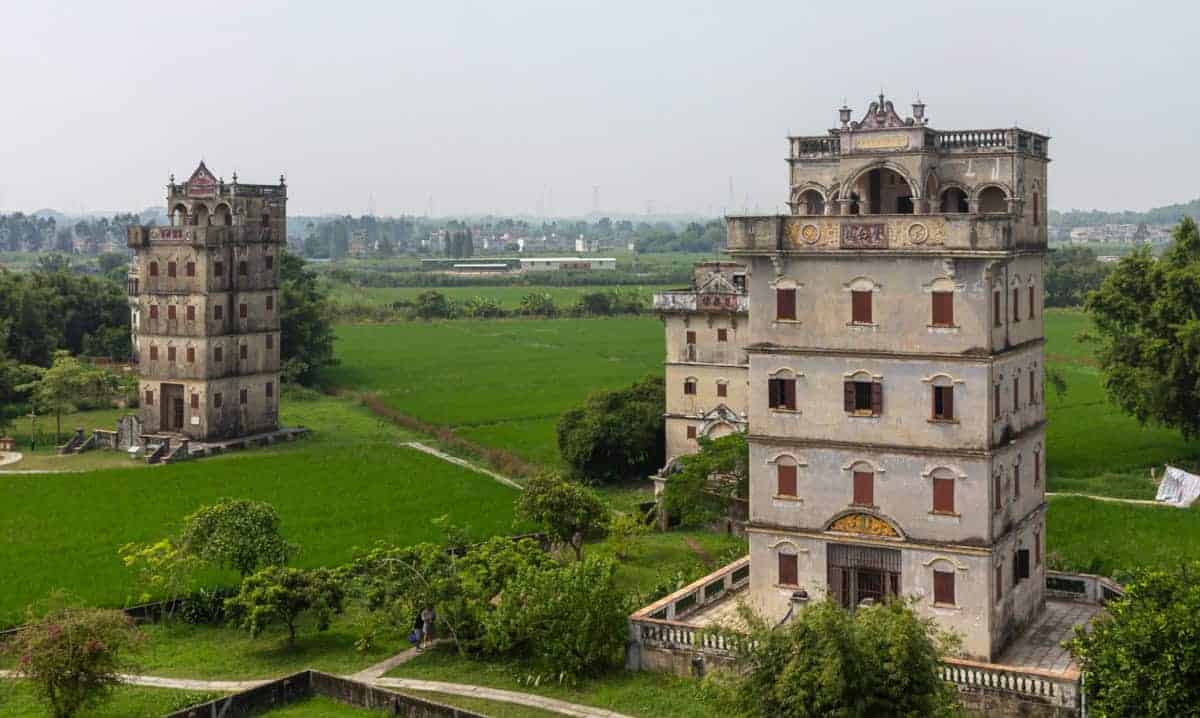
Wuyi is the region that sent two million of its people overseas. In the 1920s and 1930s nearly every household had a member abroad — Taishan’s overseas population rivaled its population at home, and remittances made it one of the richest counties in China per capita. The story of that scattering is told in our guides to the five counties of Guangdong, the Guangdong Five Counties Diaspora Legacy, and the two-hundred-year arc of the Legacy of Wuyi. What is less often told is what those two million people kept doing from every corner of the world: they fed the dead.
They did it through the Zhongyuan Festival (中元节, Zhōngyuán Jié), the autumn half of the ancestor year and the seasonal counterpart to the spring grave-sweeping of Qingming. On the night of the seventh-month half (七月半, qīyuè bàn), the dead are fed, clothed, and remembered at home, while money earmarked for the festival crosses oceans. This article explains the festival, the rites at home, the letters that funded them, and what honoring the dead means to a people scattered across every ocean.
Three Traditions, One Festival: Buddha, the Earth Officer, and the Open Gates
The Zhongyuan Festival is not one festival but three, folded into a single night. The first strand is Buddhist. The Ullambana Sutra (盂兰盆经, Yúlánpén Jīng) tells of Mulian (目连, Mùlián), a disciple of the Buddha whose mother has been reborn in the hungry-ghost realm, where every meal turns to ash. On the fifteenth day of the seventh month, the Buddha teaches, offer food to the monastic community and the merit of giving (回向, huíxiàng) transfers to the ancestors. The story of Mulian rescuing his mother (目连救母, Mùlián jiù mǔ) became the festival’s emotional engine, retold for centuries as storytelling, then opera.

The second strand is Taoist (道教, Dàojiào), which divides the year into Three Primordials (三元, sānyuán): the first month’s fifteenth, when the Heavenly Officer grants blessings; the seventh month’s fifteenth, when the Earth Officer pardons the sins of the dead (地官赦罪, Dìguān shè zuì); the tenth month’s fifteenth, when the Water Officer dissolves misfortune. Zhongyuan is the middle — the night the dead are released to receive what the living offer. The third strand is folk: the whole seventh month is the ghost month (鬼月, guǐyuè), when the gates of the underworld stand open and the dead walk among the living.
Scholars still differ on which strand came first: Stephen Teiser argues for scripture and monastic rite; Xu Hualong, for popular ghost belief. Both agree on the outcome: a festival fusing Buddhist, Taoist, and folk practice into one compassionate act, in which a Buddhist rescue converged with Confucian filial piety (孝, xiào).
In 2026, the fifteenth of the seventh lunar month falls on August 27. A gentle correction: this is not a “Chinese Halloween” — not fear of the dead but compassion for them; the hungry ghosts are the lonely and forgotten, and the rites feed, clothe, and guide them. Its closest seasonal cousin is spring’s Qingming, though where Qingming goes out to the graves, Zhongyuan brings the dead home. A note for diaspora readers: northern China fixes the festival on the fifteenth, but much of the Cantonese south, including the Wuyi counties, observes on the evening of the fourteenth — a southern system, not an error, and overseas Taishanese carried it abroad.
The Ghost Month: When the Dead Come Home
Who comes back during the ghost month? Not ancestors only — those are welcomed and fed. The ghosts that set the month’s mood are the unclaimed: the 无主孤魂 (wúzhǔ gūhún), wandering souls with no descendants to light incense for them — the unmarried, the far-from-home, the unburied.
The month has a rhythm: gates open on the first day, the dead move freely among the living, and the fifteenth is when they are most present. A code of restraint, recorded in the Wuyi gazetteers, runs with it — no night swimming, no travel after dark, no weddings, children kept close. Read from outside this looks like superstition; read from inside it is attentiveness: a household making space for a guest who has come a long way.
The contract runs the rites’ dual character — at home you feed your own ancestors, ancestral worship (祭祖, jìzǔ); in the street you feed everyone else’s forgotten dead, feeding the orphaned ghosts (施孤, shīgū). In Jiangmen, streets are dotted almost every night with incense and candles — small flames of attentiveness at every gate.

In the Hometown: Tables, Tablets, and the Duck That Travels Fast
The domestic heart of the festival is the family altar, where ancestor tablets (神主牌, shénzhǔpái) stand in ranked rows — the permanent address of the dead. They are tended year-round, most faithfully by the women of households split by emigration — the Gold Mountain wives (金山婆, Jīnshān pó), who raised children and kept the altar alone while their husbands were overseas. Where a man died abroad, a tablet — sometimes a grave-clothes cenotaph (衣冠冢, yīguānzhǒng) — was installed anyway, keeping the absent ritually present.
For the festival, the ancestral hall (祠堂, cítáng) opens its doors. Lineages schedule their autumn rites (秋祭, qiūjì) in the seventh month to overlap the festival, funded by ancestral estates (蒸尝田, zhēngchángtián) whose harvest pays for incense, paper goods, and feasts. The rule of the meal is absolute: the ancestors are seated first. Offerings are laid, incense lit, and only then do the living eat — the dead hosts and guests of the same table.
And then there is the Wuyi signature, the rite that marks this region out from every other ghost-festival observance in China: the Duck Festival (鸭仔节, yāzǎijié). In Kaiping it is called the Field-End Festival (田了节, tiánliǎojié); in Taishan, the Sixth-Month or Seventh-Month Festival. It comes after the early-rice harvest, when the fields are done, and the required offering is duck — a fat roast duck on every table. The reasons are wonderful: the duck’s webbed feet row like oars, so the ancestors travel fast to the celestial gathering; “grandpa and grandma are going up to heaven to watch the gathering” (阿公阿婆上天睇会), and they must arrive well-dressed, so brightly colored paper clothes (花衣纸, huāyīzhǐ) are folded and burned for them. Relatives are invited to eat duck (吃鸭脾), and the meal is loud and communal.
The five counties add their own texture: northern Taishan keeps the Sixth-Month Festival, elsewhere in Taishan it is the Seventh-Month; Kaiping uses five-colored paper; in Jiangmen the street burning runs all month. The performers are overwhelmingly women: household rites, roadside feedings, the folding of paper clothes. The kit is standard — the three animal offerings (三牲, sānshēng), gold-and-silver paper (金银衣纸, jīnyín yīzhǐ) — and the climax comes at dusk, when everything is burned at the household gate (化宝, huàbǎo).

Burning Clothes for the Dead
Of all the festival’s rites, the burning of paper clothes (烧衣, shāoyī) defines the Wuyi ghost month. The bundles called paper goods (衣纸, yīzhǐ) hold everything a person might need for a season: paper clothes, paper shoes, spirit money, gold-and-silver paper folded into ingots — in Taishan, brightly colored 花衣纸.
Why clothes? Because the dead return, and they must be dressed. Burning transmits: fire converts the paper thing into the real thing — kinship made material, obligation given physical form and consigned to flame.
The intimacy of the rite is in the making. A paper shirt is chosen, folded, sometimes written on with a name — the same hands that once made meals for the person it is for. The burn happens at the household gate at dusk: a bundle of colored paper, a match, smoke rising into the evening, a moment of silence before the family turns back to the table.
Then the rite widens. The street form — burning clothes on the street (烧街衣, shāojiēyī) — takes the same bundles to roadsides, crossroads, and riverbanks for ghosts who have no gate of their own; in Jiangmen it runs all month, performed by women who feed the hungry (路祭施食). The widest form is feeding the orphaned ghosts (施孤, shīgū): cooked rice, vegetarian dishes, and fruit left for the unclaimed so that they may be reborn soon (早投胎, zǎo tóutāi). Social insurance for the underworld.
The paper clothes sold in a diaspora shop today would be recognizable at home: in Singapore, where the rite runs all month under its Cantonese name, the bundles hold the same shapes under different names — Guanyin clothes, seven-colored garments, rebirth incantations, gold and silver ingots.

River Lanterns: Light Sent Across Water
If burning clothes is the festival’s domestic heart, the river lantern is its visual one. On the nights of the ghost month — above all the fifteenth — lotus-shaped paper lanterns are lit and set adrift on ponds, canals, and rivers (放河灯, fànghédēng), guiding lost souls home; their oldest purpose is to ferry the drowned and the homeless dead.
The Wuyi geography is perfect for it — Taishan a county of village ponds, Kaiping’s rivers running down toward the Tan River (潭江, Tán Jiāng). Water, in the festival’s logic, is the road the dead travel, and the lanterns are launched onto it: from the smallest pond to the broadest river, the month’s attentiveness concentrated on the fifteenth into moving lights on dark water.
There is an image here that the diaspora carried with it. A lantern on the water is a message sent to someone you cannot see, in a direction you cannot follow — lit by hand, set down gently, watched until it is a speck. That is the exact geometry of the remittance letter; and in diaspora festivals from Singapore to California, the lantern floats on the same water: light sent across distance to someone who cannot answer in person.

Money for the Ancestors: The Remittance That Bought Incense
The Wuyi ghost month was funded, directed, and verified from overseas — an insight that sets the region apart. For roughly 150 years, from the early nineteenth century to the 1970s, the pipeline between a Wuyi man abroad and his family altar was the silver letter (银信, yínxìn), the Wuyi name for the qiaoxiang remittance letter (侨批, qiáopī): “silver and letter fused,” cash and family news bound into one object, carried by couriers (批脚, pījiǎo) trusted with cash and with messages of life and death (see our guide to reading qiaopi letters).
Remittances were timed to the ritual calendar — spiking before Qingming, Zhongyuan, and the winter solstice, with letters demanding arrival “before the Zhongyuan Festival” (中元节前), a service obligation of the remittance houses (批局, pījú; 银号, yínhào). The money was often earmarked: envelopes annotated ancestor-worship funds (祭祖款, jìzǔkuǎn) or “filial respect money” (孝敬银), the standard formula “for use in worship” (以作拜祭之用) — sums designated for paper goods, grave repairs, hall upkeep.
And sometimes the earmark was the festival itself. One letter in the archives runs:
兹因乘便,付进国币伍万元,如到查收,以助中元节开用
“I take this opportunity to send fifty thousand yuan in national currency; upon receipt, use it to help cover the expenses of the Zhongyuan Festival.”
A remittance of fifty thousand yuan expressly for the festival’s expenses — and the genre is well documented: in Chaoshan, similar letters arrived almost every year, earmarked for worshipping the ancestors at Zhongyuan. Wuyi letters carried the same annotations, though fewer are digitized.
The loop closed at home: wives and kin performed the burning and the worship with the remitted money, and their replies — the return letters (回批, huípī) — reported back: “the clothes have been burned” (已烧衣, yǐ shāoyī). The split household was the ritual unit. The infrastructure matched the scale: in Taishan, the port of Haikou (海口埠, Hǎikǒubù), the “first port of Cantonese emigration,” had six money shops on one five-hundred-meter street nicknamed Bank Street,. In 2013 the archive joined UNESCO’s Memory of the World Register.
The emotional mechanism matters most. Emigration itself was framed as filial service — a son went to Gold Mountain to support his parents — and missing the festival in person produced real guilt, atoned with money. A remittance was substitute presence: a father the reader never met sits at the altar through his offerings. The letters close with formulas that carry the whole system in one line — “may the family be safe, may the ancestors protect” (望家中平安,祖先保佑). A final honesty about the economics: display spending — village ceremonies, feasts, opera — rose and fell with the business cycle, while core obligations — paper clothes, ancestor-worship funds, death rites — were shielded even in famine years. When Wuyi families cut spending, they cut everything before they cut the dead.

The Festival Abroad: Huiguan Halls and Chinatown Nights
The rites did not stay on the home side of the ocean: wherever Wuyi men gathered abroad, the festival followed, kept institutional by the regional and clan associations known as huiguan (会馆, huìguǎn). In San Francisco, the Six Companies (六大公司, liù dà gōngsī) collected dues that funded communal rites, and the Taishanese Ning Yung Association (宁阳会馆, Níngyáng Huìguǎn) hosted autumn and ghost-month observances; in Vancouver, the Chinese Benevolent Association (中华会馆, Zhōnghuá Huìguǎn) ran a Chinese public school and a home for the aged alongside its ritual duties. Taishanese was the lingua franca of these halls, one reason the rites stayed recognizably Wuyi — the same dialect, the same paper clothes, the same dates.
Under the United States’ 1882 Exclusion Act and Canada’s head tax and 1923 exclusion acts, Wuyi men were trapped in bachelor societies — unable to bring wives or go home freely. The communal ghost rites substituted for the family rites they could not perform — burning clothes, rites for the dead (祭幽, jìyōu), feeding the orphaned ghosts — collective kinship. Men with no families made a family of the dead.
The same logic extended to the unclaimed dead: associations maintained charitable lodges (义庄, yìzhuāng) and cemeteries for men who died abroad with no descendants. In San Jose, a century-old cemetery holds the graves of pioneer laborers, most without descendants; every year at Qingming, descendants and historians read out all the names. Across the ocean the proxy system ran in parallel: wives burned paper clothes with remitted money, and letters reported the rites done — the hall abroad and the altar at home, two ends of one ritual machine (see our Wuyi Migration Heritage guide).
The institutions are alive today: San Francisco’s Chinese associations sweep the city’s historic cemeteries each spring, and since 2016 an Overseas Chinese Ancestor Worship Ceremony (海外炎黄子孙祭祖大典) has been held at City Hall plaza. A note of honest sourcing: much of the record from San Francisco and Vancouver concerns Qingming; the ghost-month observances are less documented. For families without a hometown grave the observance is portable — a home altar, a temple, or the curb outside a Chinatown flat. The rite lives in the family, not the geography.

The Grand Gatherings of Singapore and Malaysia
In Southeast Asia the festival took its most spectacular form: the Ullambana grand gatherings (盂兰胜会, Yúlán Shènghuì), a month-long public observance and one of the most important festivals of the Chinese calendar in Singapore and Malaysia. The continuity with the hometown practice is direct: the festival traveled with early Cantonese migrants, whose first observances were simple — incense, candles, burned paper ingots — and who called the rite “burning street clothes” (烧街衣), the same name as in Jiangmen.
In Singapore today, families burn at the void decks of HDB apartment blocks and in shop-house corridors, using metal bins the state provides. Provision shops sell the paper bundles — Guanyin clothes, seven-colored garments, rebirth incantations, gold and silver ingots — and offerings run to roast suckling pig, tofu, bean sprouts, longan, peanuts in the shell, rice wine.
The festival’s most famous face is the getai (歌台, gētái): temporary stages with sound and light, erected for nightly shows of comic skits, magic, and song-and-dance. And here is the detail that tells you everything about the festival’s character: the first row of seats is left empty, saved for the “good brothers” (好兄弟, hǎo xiōngdì) — the euphemism for the hungry ghosts. The dead are honored guests of the neighborhood, and the neighborhood performs for them; in recent seasons getai have run from Paya Lebar to Bedok Reservoir.

Around the stages, the machinery of the month hums. Festival associations (中元会, Zhōngyuán huì) prepare communal offerings and hold feasts where the central seats are reserved for the dead; auctions of auspicious goods (标福物, biāo fúwù) raise money for next year’s rites and charity. Spirit-work opera (神功戏, shéngōngxì) is staged facing the spirit shrine, with the spirits in the front rows and the living watching from the sides — the same logic that once put Mulian operas (目连戏, Mùlián xì) on Wuyi stages. In Penang, the festival’s monumental face is the Paper King (大士爷, Dàshìyé), a towering effigy guarding the gathering.
The Wuyi role is real but under-documented: Cantonese communities — among them the Siyi, the four-county core of the Wuyi region — organized observances through their associations, and wealthy Wuyi merchants of the tin, rubber, and rice trades patronized the feasts and operas for the spirits. Silver letters from Singapore mention contributions to the grand gatherings: a man could feed the ghosts of his new home and, through remittance, those of his old one too. CulturePaedia sums up the festival in three words — sacrifice, redemption, and entertainment (祭祀、救赎、娱乐): a feast, a mercy, and a carnival at once, with the dead in the front row.
The Chain of Remembrance
Underneath the paper, the incense, and the money runs the festival’s true cargo: filial piety (孝, xiào), the moral system that makes honoring the dead the operating system of a family. For the Wuyi diaspora the stakes were existential: honoring the ancestors is how a family stays Chinese, stays Wuyi, stays connected across oceans and generations. Letters apologized for missed festivals; the money was presence by proxy.
The women of the split households carried the daily weight: the Gold Mountain wives who tended the altar alone for decades are the subject of a Taishan documentary, The Gold Mountain Coffin (金山棺, Jīnshān Guān), filmed from the wife’s perspective — the one who waited, burned the paper clothes, and kept the dead at the table.
And the dead themselves came home. Falling leaves return to their roots (落叶归根, luòyè guīgēn): elderly migrants returned to Wuyi to die; those who could not come home in life came home in death — bones shipped back for burial (运骨回乡, yùngǔ huíxiāng), laborers’ remains carried through Hong Kong’s Tung Wah charitable lodge, treated in the documentary’s haunting phrase as cargo: “bones shipped home like fish bones.”
The chain was passed from hand to hand: children learned the rites from mothers and grandmothers while fathers were away; overseas-born children were sent home to learn filial piety; Chinatown schools carried the customs after the war. Clan genealogies (族谱, zúpǔ) kept emigrants ritually present — overseas branches written into the family trees, sons adopted across the ocean. The records were sometimes bent; the obligations were binding.
In spring, Qingming sweeps the graves; in autumn, Zhongyuan feeds the dead at home — and the diaspora has kept both, from every corner of the world, for 150 years. Spring goes out to the dead; autumn brings them home.
The chain runs unbroken: from the Kaiping duck table, where a roast duck rows the ancestors to heaven and colored paper clothes are folded for them, to the Penang Paper King towering over the grand gathering, to a San Francisco huiguan hall where Taishanese men once made a family of the dead. This year the gates open on August 13, and on August 27 — the fifteenth of the seventh lunar month — the dead will be at the table again. Light incense for the names you never met. They are still there.

Sources
Government and archival sources
- Guangdong Overseas Chinese Affairs Office — 银信 definition and UNESCO 2013
- Taishan Municipal Government — Haikou Port’s money shops, “Bank Street”
- Jiangmen Municipal Government — Vancouver Chinese Benevolent Association profile
- Guangdong Overseas Chinese Affairs Office — World Memory 银信 exhibition, 2013
- Taishan Municipal Government — The Gold Mountain Coffin documentary
- State Council Overseas Chinese Affairs Office — SF cemetery sweeps
- Kaiping Tourism Board — Field-End Festival (田了节)
News and cultural reporting
Scholarship
- Teiser, Stephen F. The Ghost Festival in Medieval China. Princeton University Press, 1988.
- Hsu, Madeline Y. Dreaming of Gold, Dreaming of Home. Stanford University Press, 2000.
- Xu Hualong (徐华龙). 《中国鬼文化》 (Chinese Ghost Culture). Shanghai Literature and Art Publishing, 1991.
- Liu Jin (刘进). 《银信与五邑侨乡社会》. Guangdong People’s Publishing House, 2011.
- Singapore Chinese Cultural Centre CulturePaedia — Zhongyuan Festival
Continue Reading
- Qingming in the Five Counties: A Diaspora Descendant’s Guide to Tomb-Sweeping in Wuyi
- What Is Qiaopi? A Beginner’s Guide to Chinese Remittance Letters
- The Women Who Built Gold Mountain: Jinshanpo Wives and the Wuyi Diaspora
- From Haikou Port to the World: 200 Years of Wuyi Diaspora
Stay Connected
Follow RootsOfChina on Facebook and Instagram for new article updates, behind-the-scenes from Kaiping, and stories from the Chinese diaspora.
Suggested Reading
Is this your family’s story?
Roots Of China is built from readers’ family histories. If a story here sounds like your own — a surname, a village, a journey — leave a comment below, or share your family’s story with us and we may be able to help you find your ancestral village.
